
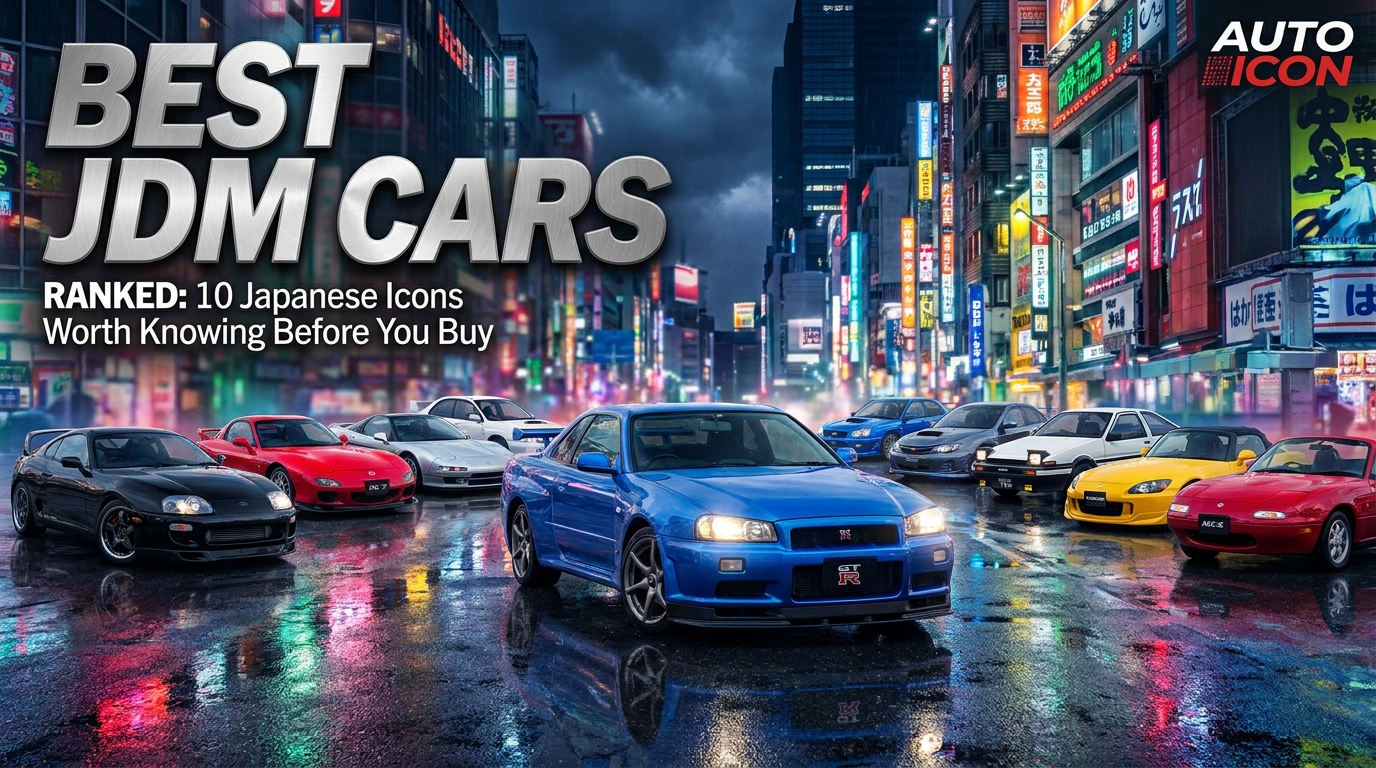
The best JDM cars combine memorable engineering, strong driver involvement, and a cultural influence that extends far beyond Japan. The Nissan Skyline GT-R earns our top overall spot. The Toyota Supra A80 is the tuning favorite, while the Honda NSX offers the most complete classic supercar experience.
Before choosing one, you need to consider more than power or movie fame. Parts availability, maintenance demands, import rules, originality, and intended use can make one Japanese icon a far better purchase than another.
Quick Comparison of the Top Choices
| Rank | Model | Best for | Key strength | Main drawback |
| 1 | Nissan Skyline GT-R | Best overall | Advanced all-wheel-drive performance | High purchase prices |
| 2 | Honda NSX | Complete sports-car experience | Balance, feedback, and usability | Expensive clean examples |
| 3 | Toyota Supra A80 | Tuning potential | Strong 2JZ-GTE engine platform | Collector-driven pricing |
| 4 | Mazda RX-7 FD | Handling and design | Light chassis and rotary character | Specialist maintenance |
| 5 | Honda Integra Type R DC2 | Front-wheel-drive fun | Sharp steering and low weight | Many cars have been modified |
| 6 | Mitsubishi Lancer Evolution VI | Rally-inspired performance | Agile all-wheel-drive handling | Frequent maintenance |
| 7 | Subaru Impreza WRX STI | All-weather excitement | Turbo power and strong traction | Engine condition varies |
| 8 | Nissan Silvia S15 | Drifting and modification | Rear-wheel-drive balance | Clean cars are scarce |
| 9 | Toyota AE86 | Classic driver involvement | Light and simple chassis | Modest standard power |
| 10 | Toyota Chaser JZX100 | Practical performance | Turbo power with four doors | Large and less agile |
How We Ranked the Best JDM Cars
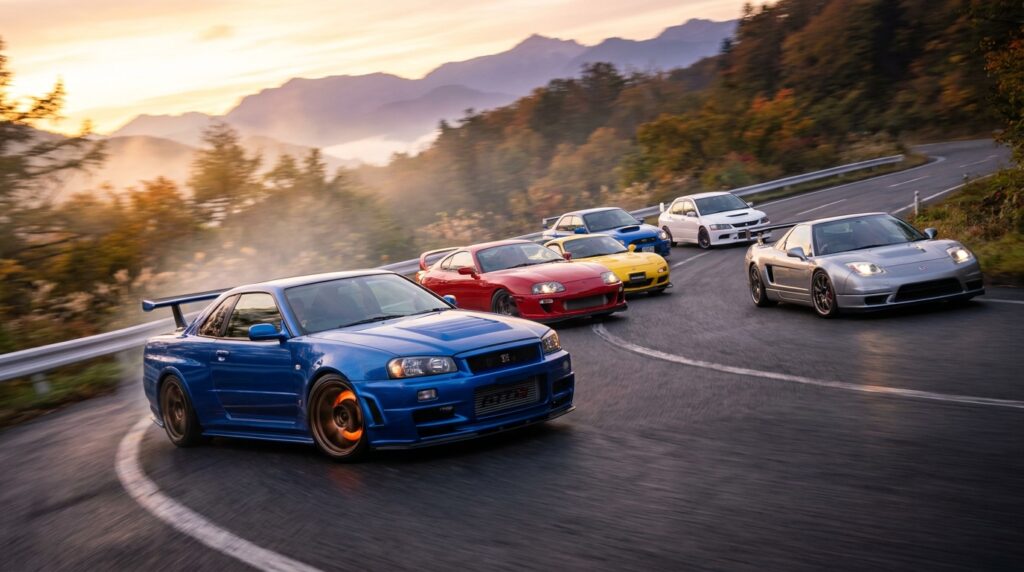
This ranking favors cars that offer more than impressive specifications. Each model was judged on driving character, engineering importance, cultural impact, tuning support, usability, and ownership difficulty.
A strict definition of JDM refers to vehicles built for sale in the Japanese domestic market. It does not automatically include every car made by a Japanese company. Japanese-market versions may have different engines, equipment, body styles, or performance specifications from export models.
Availability also depends on your country. In the United States, most vehicles that were never certified for local road use generally become eligible for normal importation once they are at least 25 years old. Buyers should confirm the production month and current regulations before paying a deposit.
1. Nissan Skyline GT-R: Best Overall
The Nissan Skyline GT-R sits at the center of Japanese performance-car culture. The R32, R33, and R34 generations paired turbocharged six-cylinder power with an advanced all-wheel-drive system and four-wheel steering on many versions.
The R32 has a strong motorsport story and remains the most attainable of the three in many markets. The R34 delivers the styling and technology most buyers associate with the GT-R name. Its rarity and media fame have pushed good examples into a far higher price category.
Pros
- Strong performance in standard form
- Huge aftermarket and enthusiast following
- Distinctive turbocharged engine character
- Excellent traction and tuning potential
Cons
- R34 prices can exceed the car’s practical value
- Modified examples require careful inspection
- Replacement parts may be expensive
Verdict: The Skyline GT-R is our top pick because it blends speed, technology, history, and cultural influence better than any other car here.
2. Honda NSX: Best Complete Sports Car
The first-generation Honda NSX challenged the idea that an exotic car needed to be difficult to drive or maintain. Its mid-engine layout, aluminum construction, clear steering, and naturally aspirated V6 created a precise yet approachable sports car.
Japanese-market buyers also received special versions, including the lighter NSX-R. Those models are now prized collector cars. Even a standard, well-kept NSX gives drivers an engaging experience without relying on extreme power.
Pros
- Excellent driving position and visibility
- Balanced mid-engine handling
- Strong build quality
- More usable than many period supercars
Cons
- Clean manual cars command high prices
- Body and trim parts can be costly
- Poor repairs can undermine the aluminum structure
Verdict: Choose the NSX when you want a polished classic that feels special on every drive.
3. Toyota Supra A80: Best for Tuning
The fourth-generation Supra became famous for its 2JZ-GTE twin-turbo inline-six. Tuners value the engine because a well-prepared setup can support substantial power increases.
Yet the Supra was not designed as a stripped track car. It is a capable grand tourer with a comfortable cabin, stable high-speed manners, and a strong automatic or manual drivetrain.
Pros
- Well-supported engine platform
- Broad supply of aftermarket components
- Comfortable enough for longer journeys
- Recognizable styling and strong resale demand
Cons
- Manual turbo versions carry a steep premium
- Heavy modifications can hide poor workmanship
- Fame has inflated prices
Verdict: The Supra is the strongest choice for a buyer who wants a proven tuning platform and is willing to accept the collector premium.
4. Mazda RX-7 FD: Best for Handling and Design
The third-generation RX-7 remains one of the most attractive Japanese sports cars ever produced. Its compact rotary engine sits low in the chassis, helping the car achieve sharp responses and excellent balance.
The twin-turbo system delivers brisk performance to the FD, but rotary ownership requires informed maintenance. Cooling problems, weak compression, poor tuning, or neglected oil checks can turn an appealing purchase into an expensive project.
Pros
- Low weight and responsive handling
- Timeless body design
- Unique rotary sound and power delivery
- Strong specialist community
Cons
- Needs rotary-specific knowledge
- Heat management is critical
- Many examples have been heavily altered
Verdict: Buy an RX-7 for its steering, balance, and character, not because you expect conventional ownership.
5. Honda Integra Type R DC2: Best Front-Wheel-Drive Choice
The Japanese-market DC2 Integra Type R proved that a front-wheel-drive coupe could feel focused, agile, and rewarding. Honda reduced weight, strengthened the body, fitted a limited-slip differential, and fitted a high-revving VTEC engine.
Its performance comes from precision rather than brute force. The steering, gearbox, and chassis reward clean inputs, making the car enjoyable at road speeds.
Pros
- Engaging manual gearbox
- Light and responsive chassis
- Strong naturally aspirated engine character
- More practical than a two-seat sports car
Cons
- Original examples are difficult to find
- Rust and accident repairs need close inspection
- Theft history is a concern in some regions
Verdict: The DC2 is the clear pick for drivers who value response and control over headline horsepower.
6. Mitsubishi Lancer Evolution VI: Best Rally-Inspired Sedan
The Lancer Evolution VI combines a turbocharged four-cylinder engine, all-wheel drive, and compact sedan dimensions. It feels alert and eager, with quick responses that reflect Mitsubishi’s rally program.
Special editions such as the Tommi Mäkinen model attract collectors, though a standard car can provide much of the same appeal for less money.
Pros
- Fast in poor weather
- Sharp turn-in and strong traction
- Practical four-door body
- Extensive performance support
Cons
- Active drivetrain systems can be costly to repair
- Hard use can wear engines and transmissions
- Unmodified cars are increasingly rare
Verdict: The Evo VI suits drivers who want intense performance without giving up four-door practicality.
7. Subaru Impreza WRX STI: Best All-Weather Character
The classic Impreza WRX STI pairs a turbocharged boxer engine with permanent all-wheel drive. Its appeal comes from rapid acceleration, distinctive sound, and confidence on wet or loose surfaces.
Japanese-market variants often had specifications that differed from those of export cars. Buyers should identify the exact chassis code, engine, transmission, and factory equipment rather than relying on an STI badge alone.
Pros
- Strong traction
- Practical cabin and trunk
- Large enthusiast community
- Exciting turbocharged performance
Cons
- Engine condition varies widely
- Poor modifications can affect reliability
- Rust can be serious in older cars
Verdict: Choose the STI for year-round performance, but prioritize service history.
8. Nissan Silvia S15: Best for Drifting
The S15 Silvia offers a front-engine, rear-wheel-drive layout in a compact body. Turbocharged Spec-R versions are especially desirable because they combine the SR20DET engine with a capable chassis and six-speed manual transmission.
Its predictable balance made it a favorite in drift culture. That popularity also means many cars have seen track use, body repairs, engine swaps, or aggressive modifications.
Pros
- Balanced rear-wheel-drive chassis
- Good modification support
- Compact size
- Strong drift and motorsport following
Cons
- Standard cars are hard to find
- Drift damage may be hidden
- Some replacement body panels are scarce
Verdict: The S15 is an excellent project platform, provided the shell is straight and the modifications are documented.
9. Toyota AE86: Best Classic Driver’s Car
The Toyota Corolla Levin and Sprinter Trueno versions known by the AE86 chassis code earned their reputation through simplicity. They use a light body, rear-wheel drive, a responsive four-cylinder engine, and direct controls.
Standard performance is modest by modern measures. The appeal lies in momentum, balance, and the way the chassis communicates with the driver.
Pros
- Simple mechanical design
- Light and playful handling
- Deep motorsport and cultural history
- Strong enthusiast support
Cons
- Slow in factory form
- Rust-free shells are valuable
- Many cars have been converted into drift builds
Verdict: Buy the AE86 for involvement and history, not straight-line speed.
10. Toyota Chaser JZX100: Best Practical Performance Car
The JZX100 Chaser combines four doors, rear-wheel drive, and available turbocharged 1JZ power. It can serve as a comfortable road car while offering serious potential for modification. Its longer wheelbase makes it more relaxed than a Silvia. It also gives owners usable rear seats and a larger cabin.
Pros
- Practical sedan layout
- Strong turbocharged engine options
- Comfortable for daily use
- Good tuning potential
Cons
- Larger and heavier than a coupe
- Manual versions cost more
- Some parts must be imported
Verdict: The Chaser is the smart choice when you want Japanese performance without sacrificing passenger space.
Explore more expert reviews and tech insights in the Technology category on Techixia.
Which Model Should You Choose?
Your ideal car depends on how you plan to use it:
- Best overall: Nissan Skyline GT-R
- Best classic sports car: Honda NSX
- Best tuning platform: Toyota Supra A80
- Best handling experience: Mazda RX-7 FD
- Best affordable driver focus: Honda Integra Type R
- Best four-door performance: Mitsubishi Evo VI or Toyota Chaser
- Best drift platform: Nissan Silvia S15
A famous badge should not outweigh condition. A well-maintained, less fashionable model often makes a better purchase than a neglected hero car.
Buying Checklist
Before buying an imported performance car, confirm:
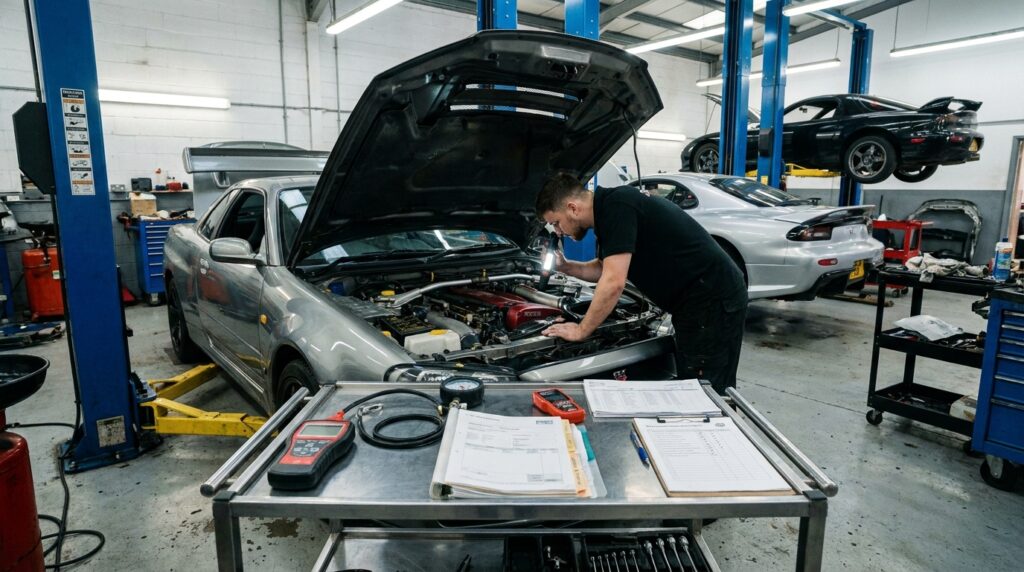
- The chassis number and production date
- Legal import and registration eligibility
- Auction sheets or Japanese ownership records
- Evidence of accident, flood, or corrosion damage
- Compression or leak-down results where relevant
- Timing-belt, cooling-system, and fluid service history
- The quality and legality of modifications
- Local access to parts and specialist workshops
Pay for an independent inspection. The inspection should come from someone familiar with the exact engine and chassis, not only the brand.
Final Verdict
The Nissan Skyline GT-R is the strongest all-around choice because it joins advanced engineering with enormous cultural importance. The Honda NSX is the more refined sports car, while the Supra offers the greatest mainstream tuning appeal.
Your best purchase may not be the highest-ranked model. Choose the cleanest car that fits your intended use, budget, mechanical knowledge, and access to specialist support. Begin with a documented example and arrange a full inspection before committing.
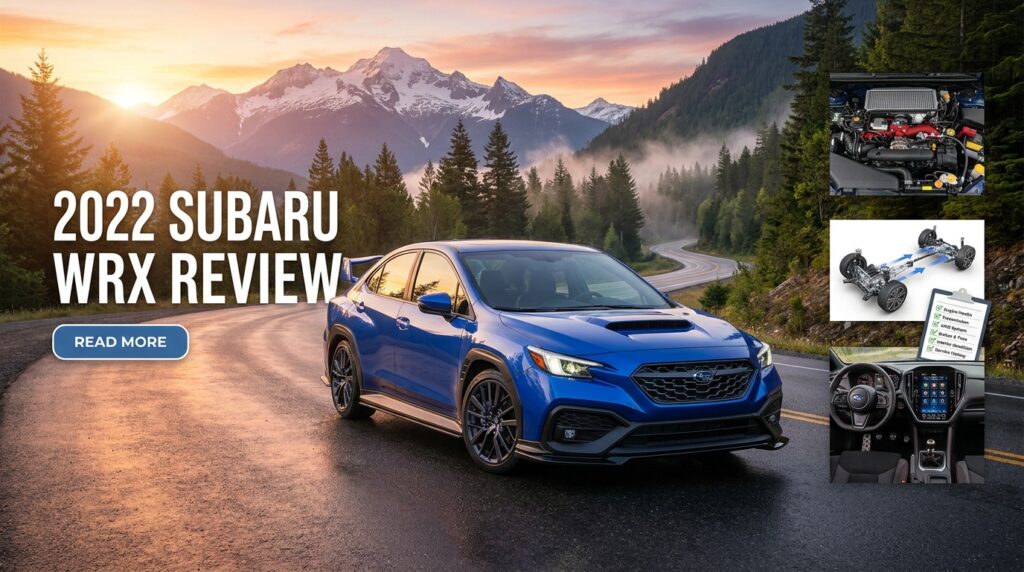
If you want to know about 2022 Subaru WRX then visit our Technology category.
Frequently Asked Questions
The best JDM cars for a first-time buyer are usually models with strong parts support and fewer specialist systems. A Honda Integra Type R, Toyota Chaser, or well-maintained Subaru can be easier to own than an RX-7 or rare GT-R.
JDM means Japanese Domestic Market. In its strict sense, it refers to a vehicle or component produced for sale in Japan, rather than to every Japanese-brand car sold worldwide. Are Japanese imports reliable?
They can be reliable when properly maintained, but age and prior use matter more than nationality. Modified cars, incomplete records, corrosion, and long storage periods increase risk.
The Toyota Supra A80 is one of the strongest choices because of its 2JZ-GTE engine and extensive aftermarket. The Skyline GT-R, Silvia, Chaser, and Lancer Evolution also have strong tuning communities.
It can work as a daily car, but it requires more attention than a conventional piston-engine model. Regular oil checks, correct warm-up habits, good cooling, and access to a rotary specialist are important.
It is worth considering for collectors who value its technology, motorsport history, and cultural importance. Buyers seeking performance per dollar may find better value in an Evo, STI, Chaser, or less famous Skyline variant.