
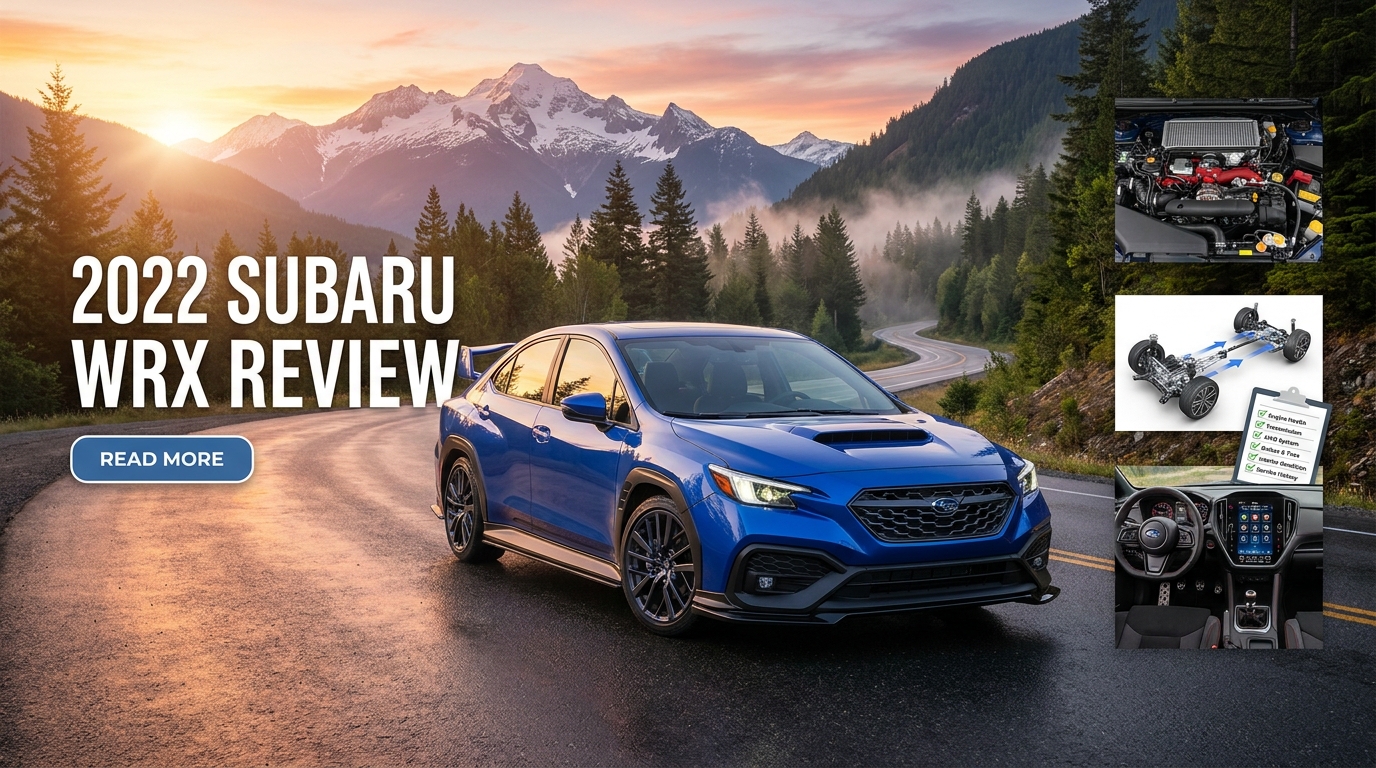
The 2022 Subaru WRX is a quick, practical sport sedan with standard all-wheel drive, a turbocharged engine, and an available six-speed manual transmission. It offers strong traction and everyday usability, but buyers should consider its firm ride, fuel use, infotainment system, and modification history before choosing a used example.
| Key fact | 2022 WRX details |
| Engine | 2.4-liter turbocharged flat-four |
| Output | 271 horsepower and 258 lb-ft of torque |
| Drivetrain | Standard all-wheel drive |
| Transmissions | Six-speed manual or Subaru Performance Transmission |
| Original base MSRP | $29,605 before destination |
| Seating | Five |
| Cargo space | 12.5 cubic feet |
| EPA combined economy | About 22 mpg for the manual model |
| Main trims | Base, Premium, Limited, GT |
Subaru redesigned the car for 2022, moving it to the Subaru Global Platform and replacing the former 2.0-liter engine with a 2.4-liter turbocharged unit. Every trim kept standard all-wheel drive, which remains the model’s clearest advantage over most front-wheel-drive sport compacts.
Key takeaways
- The 271-horsepower engine delivers useful power across a broad rev range.
- All-wheel drive provides reassuring traction in wet, cold, or loose conditions.
- The manual version offers the most traditional enthusiast experience.
- The ride is firm, and fuel economy is modest for a compact sedan.
- A stock, documented example is often safer to buy than a heavily modified car.
- Automatic models include driver-assistance technology unavailable on the 2022 manual.
What changed for the 2022 Subaru WRX?
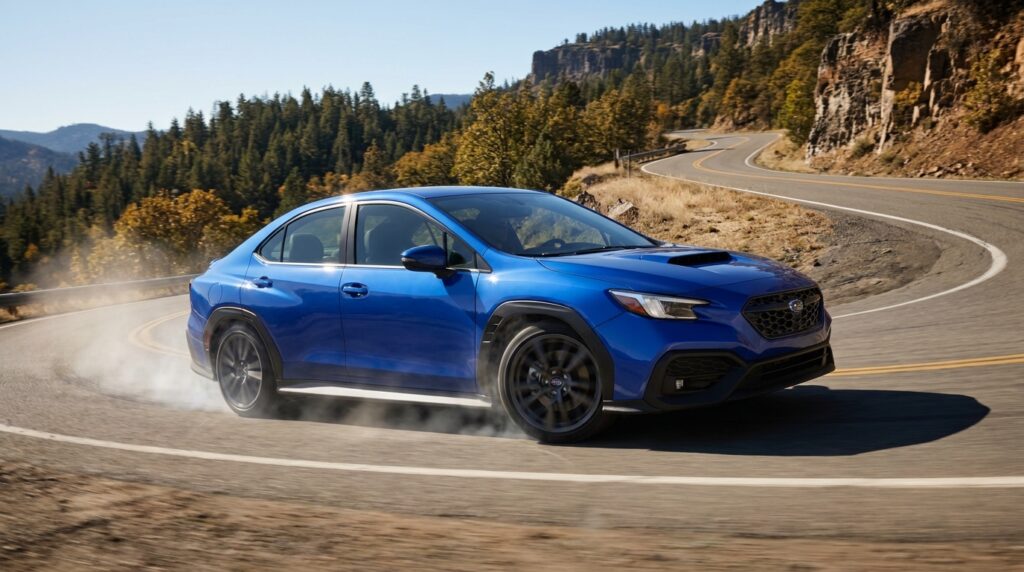
The 2022 model began the fifth generation of Subaru’s performance sedan. Its larger 2.4-liter engine produced 271 horsepower and 258 pound-feet of torque. That was only a small increase in horsepower over the outgoing model, but the broader torque delivery made the engine more flexible.
The redesign also introduced a stiffer platform, a wider body, updated suspension geometry, and more interior space. Subaru gave the exterior prominent black wheel-arch cladding and a heavily textured rear bumper. Those design choices divided buyers when the car launched and remain a matter of personal taste.
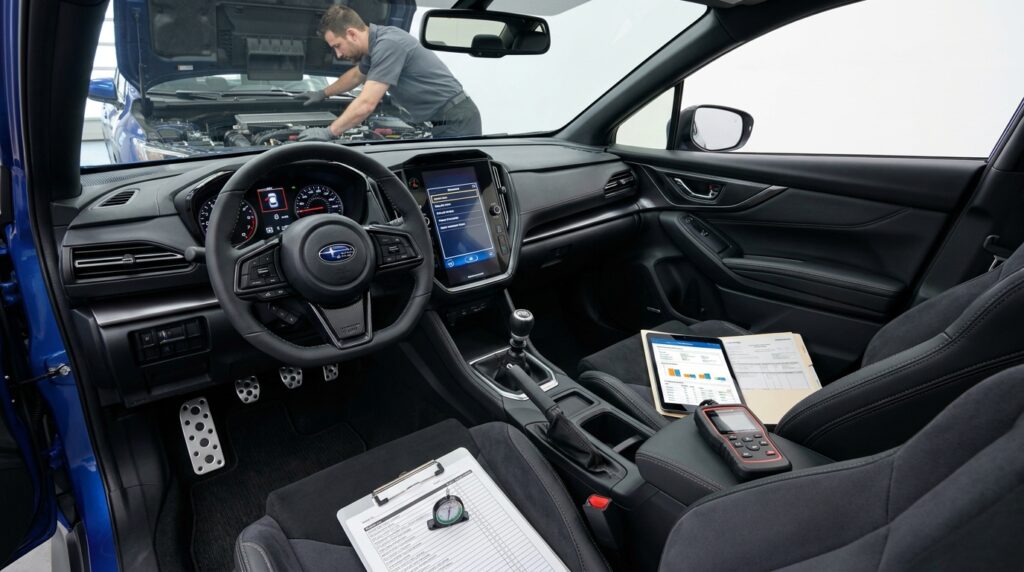
Inside, Base models received a dual-screen infotainment arrangement. Higher trims used a vertically oriented 11.6-inch display. The cabin is functional rather than luxurious, although the front seats provide good support during fast cornering.
Engine, acceleration, and driving experience
The turbocharged engine sends power through a standard six-speed manual or an automatic transmission Subaru marketed as the Subaru Performance Transmission. Both versions use all-wheel drive.
Car and Driver recorded a 5.5-second zero-to-60-mph time for a manual Limited and a 13.9-second quarter-mile at 101 mph. Edmunds recorded 6.0 seconds in its manual test, showing how surface, launch technique, weather, and testing methods can change acceleration results.
On a winding road, the car feels planted and predictable. Steering responses are direct, body movement is controlled, and the chassis gives the driver confidence. The suspension’s firmness helps during enthusiastic driving but can become tiring on broken pavement.
The manual gearbox has a positive, mechanical feel, although its shift action isn’t as light as the best rival systems. The clutch is manageable in normal traffic once the driver becomes familiar with its engagement point.
Automatic models suit commuters who face heavy traffic. The GT trim pairs the automatic with adaptive dampers, Recaro front seats, and configurable drive settings. It’s more comfortable and better equipped, but it loses some of the simple character that attracts manual-car buyers.
Manual versus automatic: which should you choose?
| Factor | Six-speed manual | Automatic |
| Driver involvement | Higher | Lower |
| Traffic convenience | Less convenient | Easier |
| Driver-assistance features | Limited for 2022 | EyeSight available |
| Transmission character | Traditional and direct | Smooth and configurable |
| Best suited to | Enthusiasts | Commuters and mixed-use drivers |
Verdict: Choose the manual when driving involvement matters most. Choose the automatic when traffic comfort and active safety technology carry more weight.
The automatic is not a conventional geared transmission. Drivers who dislike continuously variable transmissions should test it before buying. Subaru programmed simulated ratios and paddle-shift control to make it feel more responsive during spirited driving.
Fuel economy and everyday practicality
Fuel economy is one of the car’s weaker points. Edmunds lists the manual version at 22 mpg combined. Actual consumption can fall below that figure when the engine spends frequent time under boost.
Still, the model works better as daily transportation than many dedicated sports cars. It has four doors, seating for five, good outward visibility, and a usable 12.5-cubic-foot trunk. Adults can fit in the rear seats, though taller passengers may want more legroom on long journeys.
Standard all-wheel drive is useful in rain and winter weather, but the original summer tires are not suitable for freezing conditions. Owners in cold climates should budget for quality winter tires or all-season performance tires. All-wheel drive helps the car accelerate, but proper tires determine much of its braking and cornering grip.
Reliability and common concerns
Long-term data for this generation is still developing, so claims that it is exceptionally reliable or unreliable deserve caution. Most buying risks depend on the condition, service history, and previous owner’s treatment of the individual car.
Modified engines and questionable tuning
The first concern is modification history. Turbocharged enthusiast cars are frequently fitted with aftermarket intakes, exhaust parts, boost-control hardware, and engine software.
Modifications are not automatically harmful. Problems arise when parts are mismatched, tuning is poor, or the owner returns the vehicle to stock before selling it. Look for tool marks, non-factory wiring, missing heat shields, altered exhaust components, and unexplained service records.
A pre-purchase inspection by a Subaru specialist is sensible. Ask the technician to check stored fault codes, fluid leaks, clutch condition, boost behavior, and signs of previous tuning.
Infotainment behavior
Reviewers and owners have reported complaints about the large touchscreen, including slow responses and an interface that can distract from basic climate adjustments. MotorTrend’s long-term evaluation also noted that the screen could be difficult to read in certain conditions.
During a test drive, pair your phone, use navigation, adjust the temperature, and test every physical control. Confirm that the system has current software and restarts normally.
RTV sealant concerns
Online discussions have raised concerns about excess room-temperature-vulcanizing sealant used during engine assembly. The concern is that loose sealant could enter the oil system.
Evidence about the frequency and real-world effect of this issue is less conclusive than some online discussions suggest. Treat it as an inspection point rather than proof that every engine will fail. Check for low oil-pressure warnings, unusual engine noise, poor service history, or evidence of oil-pan work.
Clutch and driveline wear
A manual car may have experienced hard launches, aggressive shifting, or inexperienced clutch use. During the test drive, accelerate in a high gear from a low engine speed. Engine speed should not rise without a matching increase in road speed.
Listen for clunks that seem excessive, check that every gear engages cleanly, and watch for vibration during clutch take-up. Some driveline movement is normal in a performance-oriented all-wheel-drive car.
Safety ratings and driver-assistance equipment
The Insurance Institute for Highway Safety named the car a Top Safety Pick+ when equipped with optional front crash prevention. It earned “Good” results in the listed front, side, roof-strength, and head-restraint evaluations.
There is an important equipment distinction. EyeSight driver assistance was tied to the automatic transmission for this model year. IIHS rated the optional system “Superior” in its vehicle and pedestrian front-crash-prevention evaluations.
Buyers should also run the vehicle identification number through the official recall lookup before purchasing. Recall applicability depends on the individual VIN, production date, transmission, and installed equipment.
What to inspect before buying
Use this process before committing to a used example:
- Check the VIN history. Review title status, accidents, mileage records, and open recalls.
- Request maintenance records. Look for consistent oil changes and documented repairs.
- Identify modifications. Confirm whether the engine, intake, exhaust, suspension, or software differs from factory specifications.
- Inspect the tires. Uneven wear may indicate alignment problems or aggressive use.
- Test the clutch or automatic transmission. Watch for slipping, hesitation, warning lights, or harsh behavior.
- Check every electronic feature. Test the touchscreen, cameras, phone connection, climate controls, and safety systems.
- Arrange an independent inspection. A specialist can detect problems that a short drive may miss.
The safest target is usually a largely stock car with service documentation, matching quality tires, no warning lights, and an owner who can clearly explain its history.
Is the 2022 model worth buying?
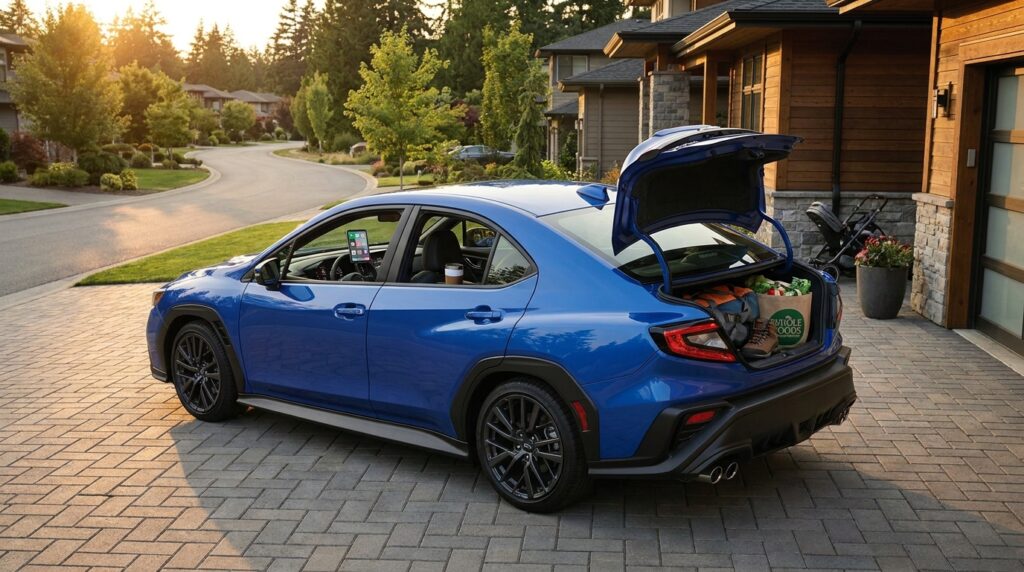
The 2022 Subaru WRX is worth considering when you need year-round traction, four-door practicality, and genuine performance in one car. It feels secure on difficult roads and still gives manual-transmission buyers an engaging option.
It is less appealing when fuel economy, a soft ride, refined cabin materials, or simple touchscreen controls are your priorities. Front-wheel-drive rivals may feel lighter and use less fuel, while higher-output alternatives can be faster.
For most shoppers, the Premium trim offers the strongest balance of equipment and cost. Limited models add comfort and upgraded lighting. The GT is aimed at drivers who want an automatic, adjustable suspension, and more cabin equipment. Condition matters more than trim. A carefully maintained Base or Premium is usually a better purchase than a neglected Limited or GT.
Final verdict
Buy one when you value all-weather traction, turbocharged performance, practical seating, and an available manual gearbox. Focus on an unmodified or professionally tuned example with complete maintenance records.
Before you purchase, compare several cars, inspect their histories, and pay for an independent mechanical evaluation. That extra step can separate a rewarding performance sedan from an expensive repair project.
Explore more expert reviews and tech insights in the Technology category on Techixia.
Frequently asked questions
It can provide dependable service when it remains close to factory specification and receives regular maintenance. Used buyers should pay special attention to tuning history, oil service, clutch wear, tires, and infotainment operation.
Independent tests have recorded zero-to-60-mph times between roughly 5.5 and 6.0 seconds for manual cars. Results vary with launch method and test conditions.
Subaru designed the turbocharged powertrain to operate on premium gasoline for its intended performance. Check the owner’s manual and fuel-door label for the requirements that apply to your market.
The 2022 manual did not receive the same EyeSight package offered with the automatic. Buyers who prioritize adaptive safety systems should verify the equipment fitted to the specific car.
Check for poor modifications, questionable engine tuning, infotainment faults, clutch wear, uneven tires, fluid leaks, and incomplete recall work. A professional inspection can reveal hidden accident damage or evidence of hard use.
Yes, when fitted with tires designed for the temperature and conditions. Standard all-wheel drive improves traction, but it cannot replace appropriate winter tires.