
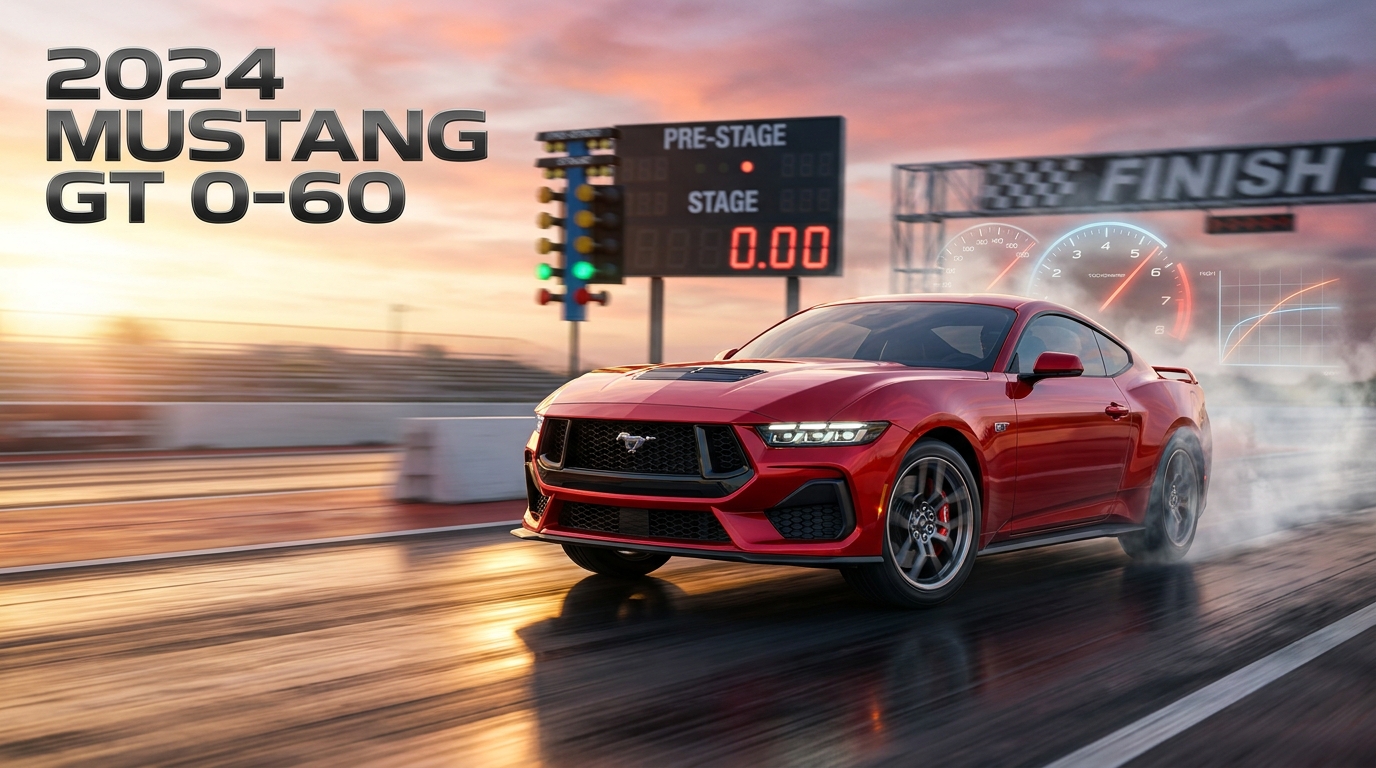
The 2024 Mustang GT 0-60 time is approximately 4.2 to 4.3 seconds in reputable instrumented tests. A well-equipped car with a strong launch may run slightly quicker. Transmission choice, tires, road conditions, temperature, driver technique, and testing methods can all change the final result.
Car and Driver recorded a 4.2-second run in a GT fitted with the performance exhaust. MotorTrend tested a manual Performance Package model at 4.3 seconds. Both publications recorded a 12.5-second quarter-mile, supporting a realistic low-four-second estimate rather than an unsupported single figure.
| Performance detail | Reported result |
| Typical 0-60 mph range | 4.2–4.3 seconds |
| Car and Driver test | 4.2 seconds |
| MotorTrend manual test | 4.3 seconds |
| Tested quarter-mile time | 12.5 seconds |
| Quarter-mile trap speed | About 114–115 mph |
| Standard GT output | 480 horsepower |
| Output with active exhaust | Up to 486 horsepower |
| Available transmissions | Six-speed manual or 10-speed automatic |
The 2024 Mustang GT 0-60 Time in Real Tests
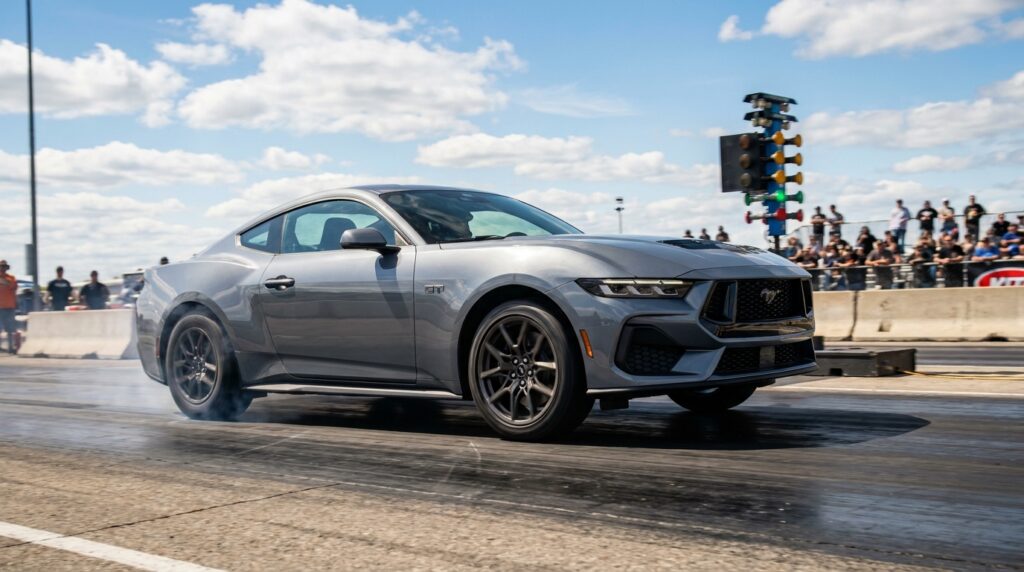
There is no single acceleration time that applies to every GT. Independent tests provide a more useful answer because they show what specific cars achieved under controlled conditions.
Car and Driver tested a GT with the performance exhaust and recorded 0-60 mph in 4.2 seconds. The same car completed the quarter-mile in 12.5 seconds at 114 mph. The publication noted that manually managing the launch produced a quicker result than relying on launch control.
MotorTrend tested a six-speed manual GT Coupe with the Performance Package. It reached 60 mph in 4.3 seconds and completed the quarter-mile in 12.5 seconds at 114.7 mph. Those results are close enough to establish a dependable baseline. For most comparisons, about 4.2 seconds is a fair headline figure. A manual car may take around 4.3 seconds under similar conditions.
If you enjoy performance cars, don’t miss our Jeeps and Rubber Ducks, and explore the Technology category on Techixia for more automotive reviews, buying guides, and the latest tech insights.
Why Published Acceleration Times Vary
Two otherwise identical Mustangs can produce different numbers. A difference of one or two tenths doesn’t necessarily mean one car has more power.
Transmission choice
The GT offers a six-speed manual and an optional 10-speed automatic. Ford also made the six-speed available on GT-based models such as the 2024 California Special. The automatic can shift faster and more consistently than most drivers. It also keeps the engine within a useful power range during acceleration.
The manual gives the driver more control and involvement. Its result depends heavily on clutch release, shift speed, engine speed, and wheelspin. A poor launch can add several tenths.
Tires and the Performance Package
Acceleration requires traction, not only horsepower. Performance-oriented tires can put more power onto the road before spinning. The Performance Package changes more than the car’s appearance. Its wider performance tires and chassis upgrades can help the driver launch with greater confidence. Cold tires provide less grip. Worn tires, excessive tire pressure, and dusty pavement can also slow the car.
Launch technique
A rear-wheel-drive car with a naturally aspirated V8 needs a balanced launch. Too little throttle can bog the engine. Too much throttle can overwhelm the rear tires. Car and Driver found that taking direct control of the launch produced its quickest run. That result shows why launch control doesn’t guarantee the best time in every test.
Weather and road conditions
Cool, dense air may help an engine produce power, but cold pavement can reduce tire grip. High temperatures can hurt engine performance and make the surface greasy. Track preparation also matters. A prepared drag strip offers more traction than an ordinary public road. Drivers shouldn’t attempt timed acceleration runs on public streets.
Testing method
Some publications use a one-foot rollout when reporting acceleration. This method starts the timer after the vehicle has moved a short distance. Other tests begin measuring from a complete standstill. Rollout can reduce the published result by a few tenths, so two test figures may not be directly comparable.
Vehicle weight, fuel level, optional equipment, altitude, and the number of occupants may also affect the result.
Manual vs Automatic: Which One Is Faster?
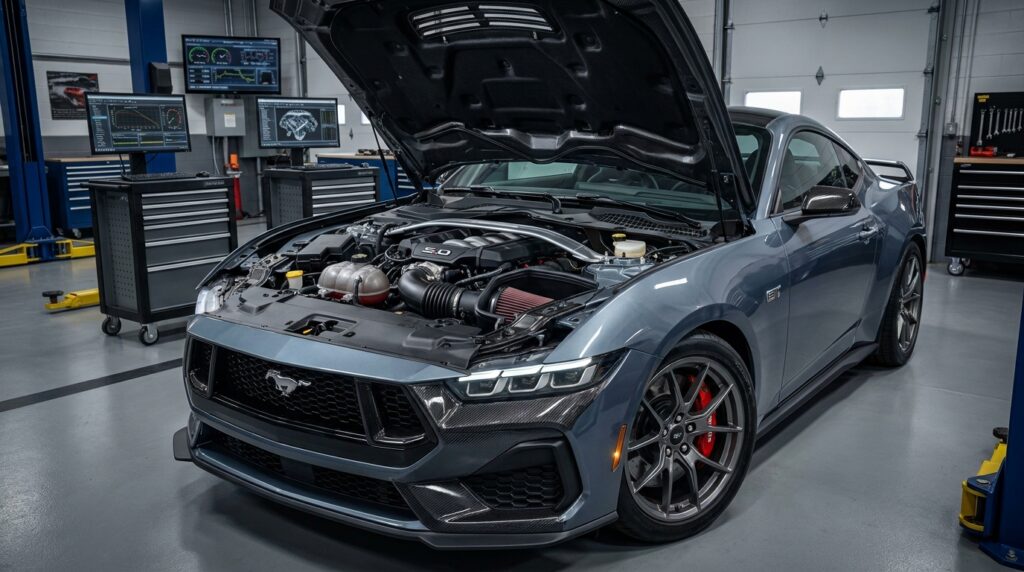
The 10-speed automatic is usually the stronger choice for repeatable straight-line acceleration. Its rapid shifts reduce interruption between gears, and its programming removes much of the variation caused by the driver. A manual GT can still run in the low-four-second range. MotorTrend’s 4.3-second test proves that the six-speed car remains quick.
The manual’s appeal is different. It gives the driver control over clutch engagement, gear selection, and shift timing. That interaction can matter more than a tenth of a second. Choose the automatic when consistent acceleration is your priority. Choose the manual when you value involvement and don’t mind working for the best result.
How the GT Compares With Other 2024 Mustangs
The GT sits between the EcoBoost and the track-focused Dark Horse.
| Model | Tested 0-60 mph time | Main distinction |
| Mustang EcoBoost | 4.5–4.9 seconds | Turbocharged four-cylinder |
| Mustang GT | 4.2–4.3 seconds | Naturally aspirated 5.0-liter V8 |
| Mustang Dark Horse | Around 4.1 seconds | 500-hp track-focused V8 model |
Car and Driver recorded 4.5 seconds for the 2024 EcoBoost. MotorTrend recorded 4.9 seconds in a separate EcoBoost configuration, showing how equipment and conditions can change the result. The GT’s advantage isn’t limited to its initial launch. Its V8 produces stronger sustained acceleration and a different driving character.
The Dark Horse adds track-focused hardware and a 500-horsepower version of the 5.0-liter engine. Car and Driver describes it as the performance step above the standard GT.
What the Quarter-Mile Result Tells You
A 0-60 time depends heavily on the launch. The quarter-mile gives a broader view of the car’s acceleration. Both Car and Driver and MotorTrend recorded a 12.5-second quarter-mile from the GT. Car and Driver measured 114 mph at the finish, while MotorTrend reported 114.7 mph.
That consistency matters. It suggests the GT’s performance isn’t based on one unusually quick launch. The car continues accelerating strongly after 60 mph.
For buyers comparing performance cars, the trap speed can be as useful as the elapsed time. It reflects the vehicle’s power once traction plays a smaller role.
Is the 2024 Model Quicker Than the Previous Mustang GT?
The seventh-generation Mustang introduced new styling, a redesigned interior, updated electronics, and a revised version of Ford’s 5.0-liter Coyote V8. Straight-line performance didn’t make the same dramatic leap. Car and Driver described its 4.2-second result as roughly equal to the previous generation’s performance.
That isn’t necessarily a weakness. The prior GT was already a quick car. The newer model combines comparable acceleration with a newer cabin, updated software, more display technology, and revised performance features.
Buyers moving from a recent sixth-generation GT shouldn’t expect a night-and-day difference in a straight line. The broader ownership experience represents the larger change.
Can You Improve the Acceleration Time?
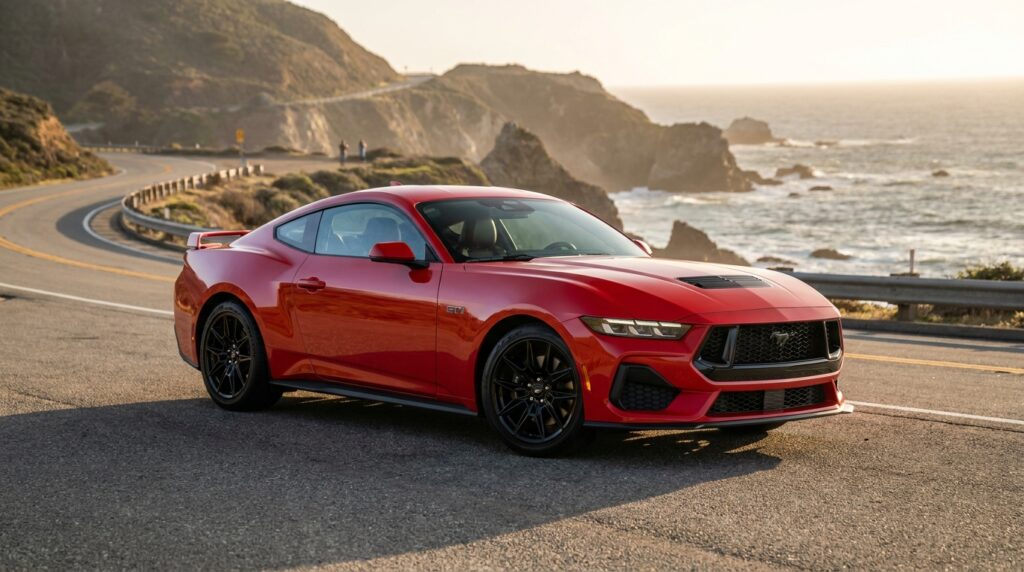
Small improvements may be possible without adding engine power. Focus on repeatability and traction before considering modifications.
Useful steps include:
- Use tires suited to the weather and driving conditions.
- Check that tire pressures match the manufacturer’s guidance.
- Allow the tires and drivetrain to reach a suitable operating temperature.
- Remove unnecessary cargo before a closed-course run.
- Practice smooth throttle application rather than excessive engine speed.
- Compare runs on the same surface and under similar weather conditions.
Modifications may affect reliability, emissions compliance, warranty coverage, insurance, and road legality. Research those consequences before changing engine software, exhaust components, gearing, or tire specifications.
Performance testing should take place at a drag strip or another controlled venue. Public-road acceleration runs put drivers and other road users at risk.
Verdict: Is the 2024 Mustang GT Fast?
Yes. A realistic low-four-second 0-60 time puts the GT firmly in modern performance-car territory. The automatic offers the easiest path to repeatable acceleration. The manual remains competitive while giving the driver more involvement.
The most defensible figure is 4.2 seconds for a well-equipped test car, with about 4.3 seconds representing a tested manual configuration. Real owners may see slower results when grip, weather, fuel, elevation, or launch technique aren’t ideal.
If you want to know about Best JDM Cars, then visit our Technology category.
Frequently Asked Questions
Ford doesn’t provide a single universal time that covers every transmission and configuration. Independent testing recorded 4.2 seconds with Car and Driver and 4.3 seconds with MotorTrend’s manual Performance Package car.
A favorable automatic-transmission configuration may approach or break four seconds in some circumstances. The most clearly documented major-publication results used here are 4.2 and 4.3 seconds.
The automatic is generally more consistent because it shifts rapidly and reduces driver error. A well-driven manual remains close, as shown by MotorTrend’s 4.3-second result.
Two independent tests recorded 12.5 seconds. Their trap speeds were approximately 114 and 114.7 mph.
The gap can look small in ideal testing. Car and Driver recorded 4.5 seconds for the EcoBoost, while MotorTrend recorded 4.9 seconds in another configuration. The V8 model has stronger quarter-mile performance and a different power-delivery character.
Compare both transmissions before choosing. Test the manual for engagement and the automatic for repeatability. Review tires, packages, insurance costs, fuel needs, and daily comfort alongside the acceleration figures.