

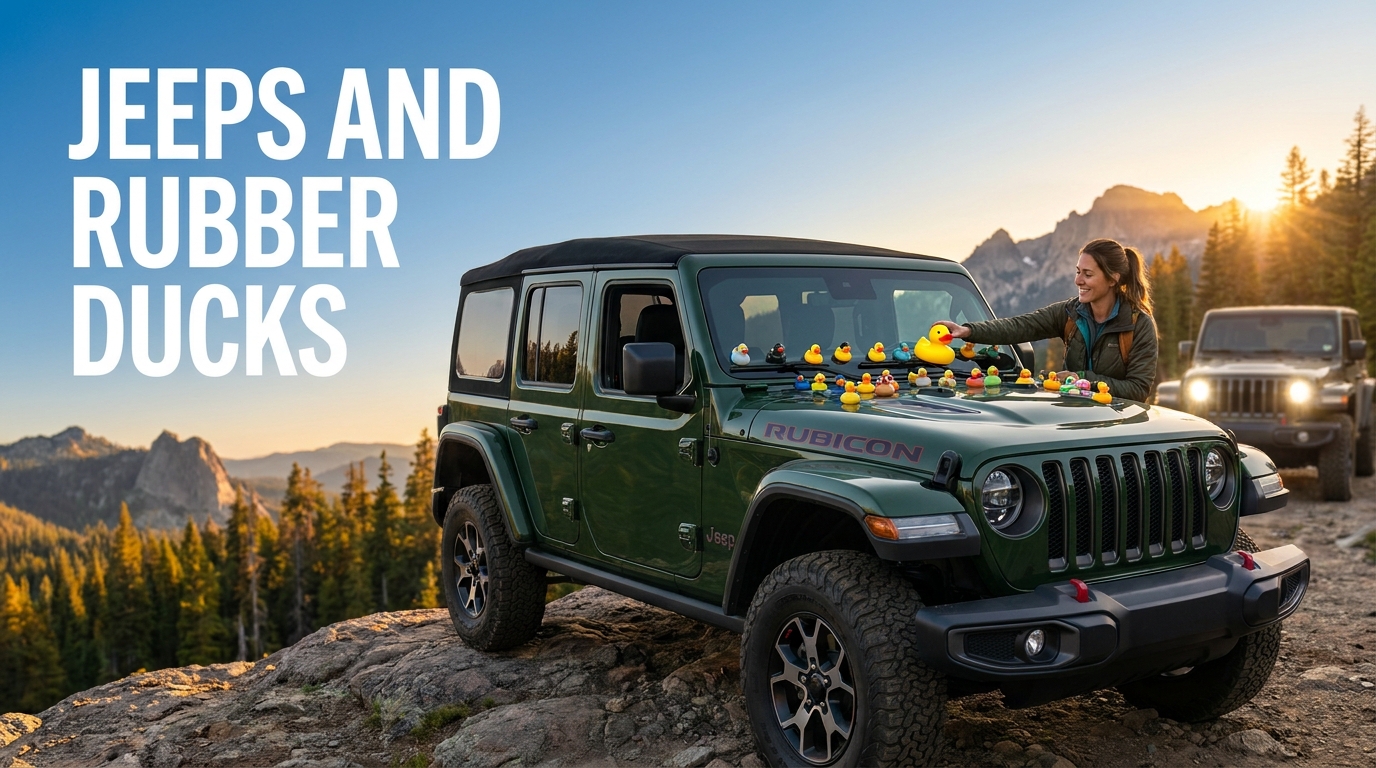
The connection between jeeps and rubber ducks comes from a friendly custom called Jeep ducking. A participant leaves a small rubber duck on another person’s Jeep as a compliment or random act of kindness. What began with one thoughtful gesture in 2020 grew into a recognizable tradition among Jeep owners around the world.
| Quick fact | Details |
| Name of the tradition | Jeep ducking or Duck Duck Jeep |
| What participants do | Place a rubber duck on another person’s Jeep |
| Main purpose | Share kindness and recognize a fellow owner |
| Common placement | Door handle, hood, windshield area, or side mirror |
| Where it began | Ontario, Canada |
| Person credited with starting it | Allison Parliament |
| Year it began | 2020 |
| Popular social hashtags | #DuckDuckJeep and #JeepDucking |
Direct answer: Jeep owners leave rubber ducks on other Jeeps to spread kindness, compliment the vehicle, and connect with another member of the community. The recipient may keep the duck, display it on the dashboard, post a photo online, or pass it to another owner.
Why Are Jeeps and Rubber Ducks Connected?
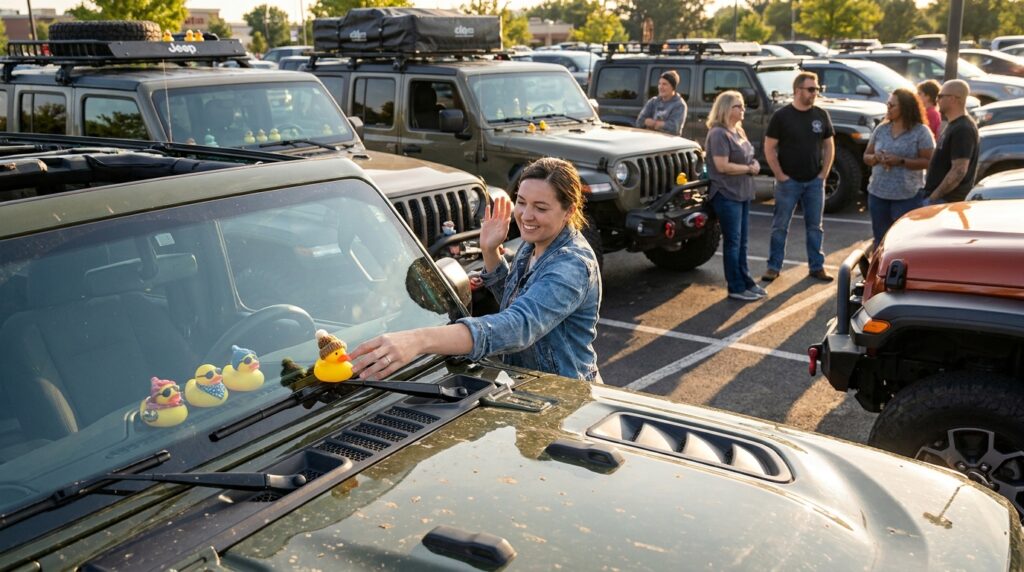
Jeep ducking is a simple form of positive recognition. When an owner spots a Jeep they like, they may place a small duck somewhere the driver will easily find it. The duck often comes with a short note. It may say “Nice Jeep,” “You’ve been ducked,” or another friendly message. Some tags also include a social media hashtag so the recipient can share the moment online.
Jeep’s own explanation describes ducking as placing a toy duck on someone else’s vehicle, usually with a kind note. The company presents it as an act intended to create smiles among people who share an interest in the brand.
The practice isn’t a competition or an official award. A duck doesn’t indicate that a vehicle has passed an inspection or achieved a certain off-road milestone. It is simply a small compliment from one person to another.
If you enjoy performance cars, don’t miss our 2022 Subaru WRX Review, and explore the Technology category on Techixia for more automotive reviews, buying guides, and the latest tech insights.
How the Jeep-Ducking Tradition Began?
Allison Parliament is widely credited with starting the modern movement in Ontario, Canada, during the summer of 2020. After an unpleasant encounter, Parliament decided to take action. She placed a small rubber duck on another Jeep and added a friendly message. The owner noticed the gesture and encouraged her to share it on social media.
That post helped the idea spread. Other drivers began carrying ducks in their vehicles and repeating the gesture in their own communities. MotorTrend describes the movement as an act of kindness that grew throughout the international Jeep community.
The tradition became known as both Jeep ducking and Duck Duck Jeep. Although it began as a community-led activity, the Jeep brand later recognized it publicly. Jeep now calls ducking a major part of its owner community and has featured collectible ducks in official promotions.
Parliament died in June 2024, but the tradition continues as part of her legacy. Jeep owners still use the gesture to share the same message of kindness that inspired the first duck.
What Does It Mean When Your Jeep Gets Ducked?
Finding a toy duck on your vehicle usually means someone noticed and appreciated it. They may have liked its color, accessories, modifications, cleanliness, personality, or overall appearance.
The gesture can also mean:
- Welcome to the Jeep community.
- Your vehicle made someone smile.
- Another owner appreciated your custom build.
- Someone wanted to brighten your day.
- A fellow enthusiast wanted to continue the tradition.
You aren’t required to post the duck online or give another one away. There is no formal obligation attached to receiving it.
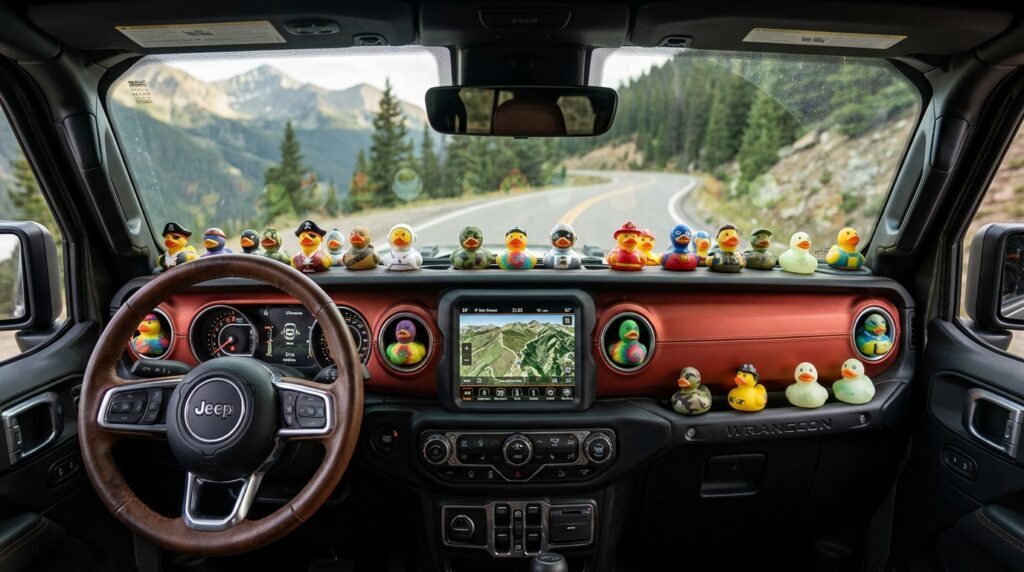
Many owners keep their first duck as a souvenir. Others place several on the dashboard, creating what enthusiasts often call a duck pond. MotorTrend uses this term for collections displayed across a Jeep’s dashboard.
How to Duck a Jeep Respectfully?
The tradition has no official rulebook, but basic courtesy matters. The goal is to leave a pleasant surprise without unnecessarily touching or damaging the vehicle.
- Choose a suitable duck.
A small, clean toy works well. It should not contain sharp pieces, leaking liquid, glitter, or anything that could scratch paint.
- Add a friendly note.
Write a brief message such as “Nice ride” or “You’ve been ducked.” You can include #DuckDuckJeep if you’d like the recipient to share it.
- Pick an easy-to-see location.
Place the duck on a door handle, side mirror, hood, or near the windshield. Make sure it won’t interfere with the driver’s view.
- Avoid opening the vehicle.
Never enter an unlocked Jeep, move personal belongings, or reach through an open window. Keep the interaction outside the vehicle.
- Respect private property.
Don’t enter restricted driveways, garages, dealership storage areas, or gated property to leave a duck.
- Walk away without expecting anything.
The driver doesn’t owe you a photo, a social post, a message, or a duck in return.
A good test is simple: the owner should be able to find the toy, understand the friendly intent, and remove it without concern.
Where Should You Place the Duck?
The safest location depends on the vehicle and the weather.
| Placement | Benefits | Possible concern |
| Door handle | Easy for the driver to notice | May fall if loosely balanced |
| Side mirror | Visible without touching paint | Wind can knock it off |
| Hood near windshield | Common and easy to see | Avoid blocking wipers or vents |
| Front bumper | Works well at gatherings | Driver may not notice it immediately |
| Windshield area | Highly visible | Never block the driver’s field of view |
Avoid putting a duck on a hot engine surface, near moving parts, inside an exhaust pipe, or anywhere that may create a driving hazard. During strong wind or heavy rain, a paper note may need a secure tag.
Can You Duck Any Jeep Model?
The movement was strongly associated with Wranglers in its early years, but many participants now include other models. The wider custom may cover Cherokees, Gladiators, Compasses, Renegades, Grand Cherokees, and other vehicles carrying the Jeep badge.
Individual opinions differ. Some participants prefer ducking only Wranglers, while others recognize any Jeep model. The broader definition of the custom now includes Jeep vehicles beyond the Wrangler.
You may also see similar activities involving other car brands. Mini owners, for example, have their own ducking tradition. Other communities have experimented with small cows, sharks, or character toys. These related customs are separate from the Jeep movement.
Explore more expert reviews and tech insights in the Technology category on Techixia.
Do All Jeep Owners Like Being Ducked?
No. Many owners enjoy the surprise, but participation is voluntary.
A driver may remove the duck because they don’t collect toys, prefer an uncluttered vehicle, worry about waste, or don’t know what the gesture means. Their reaction doesn’t make the gift unsuccessful. The participant still offered a friendly moment without demanding a response.
You can reduce the chance of causing annoyance by following three principles:
- Don’t attach anything with glue, tape, or magnets.
- Don’t place the item where it could damage the finish.
- Don’t leave several ducks on the same vehicle.
Owners who don’t want to participate can simply remove the duck, give it to someone else, or decline to display it.
Why the Tradition Spread So Quickly?

The idea works because it is inexpensive, visual, and easy to repeat. A small toy can cross the gap between strangers without requiring a long conversation. Social media also helped. Hashtags allowed recipients to post their ducks, show their vehicles, and connect with other participants. Each photo explained the custom to more people.
The practice fits a larger culture built around owner recognition. Jeep drivers already had the Jeep Wave, an older custom in which drivers greet each other on the road. Ducking added a parked-vehicle version of that community interaction. The two traditions are related in spirit but developed separately.
Official brand recognition gave the custom greater visibility. Jeep has since described ducking as an organic movement that connects drivers and has incorporated themed ducks into recent promotional programs.
A Small Gesture With a Lasting Message
The story of Jeeps and rubber ducks is less about the toy than the intention behind it. One person turned a difficult moment into an act of kindness, and thousands of owners found an easy way to repeat it.
You don’t need an expensive accessory or a customized vehicle to take part. Choose a safe duck, add a kind note, place it respectfully, and let the next driver enjoy the surprise.
If you want to know about Best JDM Cars then visit our Technology category.
Frequently Asked Questions
It refers to Jeep ducking, a tradition in which someone leaves a toy duck on another person’s Jeep. The duck serves as a compliment, friendly greeting, or random act of kindness.
The movement began within the owner community rather than as a company campaign. Jeep later recognized and celebrated the custom through official content and promotions.
You can keep it, display it, give it to a child, or pass it to another owner. There is no required response.
You can buy ducks for your dashboard, but presenting them as gifts you received may conflict with the community spirit. The tradition is centered on recognition from another person.
Keep it positive and brief. “Nice Jeep,” “You’ve been ducked,” and “A little duck for an awesome ride” are suitable examples.
Make sure they don’t block your view, interfere with airbags, or become loose projectiles. A large dashboard collection should be secured and kept below the windshield sightline.