

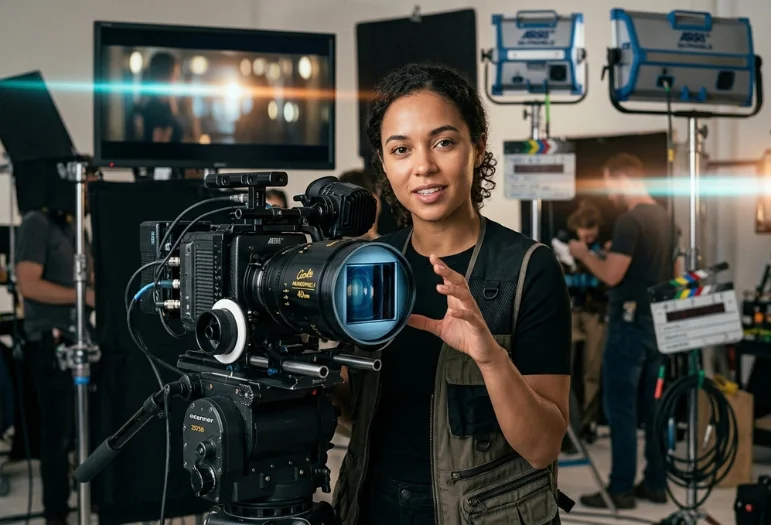
An anamorphic lens captures a wider horizontal field of view by squeezing the image before it reaches the sensor. After recording, the footage must be desqueezed so people and objects return to normal proportions. Filmmakers choose this process for widescreen framing and optical character that a simple crop cannot fully reproduce.
An anamorphic lens optically squeezes a wider horizontal view onto film or a digital sensor. The image looks narrow until a matching desqueeze restores normal proportions. That process also creates familiar traits, including wider framing, oval bokeh, horizontal flares, and distinctive edge character.
| Quick fact | What it means |
|---|---|
| Core function | Compresses the horizontal image during capture |
| Common squeeze factors | 1.33x, 1.5x, 1.6x, 1.8x, and 2.0x |
| Typical visual traits | Oval bokeh, horizontal flares, softer edges, wider framing |
| Post-production need | Footage usually needs a matching desqueeze |
| Best fit | Narrative video, music videos, commercials, and stylized creator work |
| Main trade-offs | More setup, harder focusing, possible distortion, added cost and weight |
Key Takeaways
- Anamorphic optics squeeze the horizontal image instead of simply cropping the top and bottom.
- A 1.33x squeeze on 16:9 produces about 2.37:1 after desqueezing.
- Stronger squeeze factors usually create a more pronounced optical character.
- Spherical lenses are simpler when you want clean geometry and faster production.
- Cameras and monitors may offer live desqueeze previews while recording squeezed footage.
What Is an Anamorphic Lens and How Does It Work?
Unlike spherical glass, anamorphic optics compress only the horizontal axis. This lets more side-to-side information fit within a given sensor area. A matching stretch during monitoring or post-production restores the intended geometry.
The method became central to widescreen cinema during the 1950s. Its original purpose was fitting wider scenes onto established film formats. Digital filmmakers now use it mainly for framing and optical character.
Modern cameras can crop spherical footage into a wide ratio. That approach changes the frame but not the lens behavior. True anamorphic capture can also change bokeh, flare shape, edge rendering, and perceived spatial depth.
What the Squeeze Factor Means
Squeeze factor describes how strongly the optics compress horizontal information. The final aspect ratio depends on both sensor shape and squeeze strength. A simple rule is capture aspect ratio multiplied by squeeze factor.
| Capture format | Squeeze | Approximate desqueezed ratio | Practical result |
|---|---|---|---|
| 16:9 | 1.33x | 2.37:1 | Close to modern scope with little cropping |
| 16:9 | 1.5x | 2.67:1 | Wider image that often needs side cropping |
| 16:9 | 2.0x | 3.56:1 | Extremely wide unless cropped heavily |
| 6:5 | 2.0x | 2.40:1 | Close to a common cinema delivery ratio |
A 1.33x design often fits standard 16:9 cameras well. A 2x design usually benefits from taller sensor modes, including 6:5 or open-gate options. Blackmagic documents these relationships across several recording formats and squeeze strengths.
The number does not tell you image quality by itself. Lens design, coatings, focus behavior, and sensor coverage also matter. Two lenses with identical squeeze values can still render scenes quite differently.
Why Anamorphic Footage Looks Different
Wider framing is only one part of the visual effect. Out-of-focus highlights often become tall ovals instead of circles. Bright point sources can also stretch into horizontal flare streaks.
Many designs soften edges or bend straight lines more than modern spherical lenses. Some also show stronger focus breathing or changing squeeze near close focus. These traits can feel expressive, but they can complicate technical shots.
The look varies between lens families, so no single visual signature applies everywhere. Strong flare coatings can produce bold streaks, while neutral coatings can stay restrained. Testing your exact camera and lens combination remains the safest approach.
Anamorphic vs. Spherical Lenses
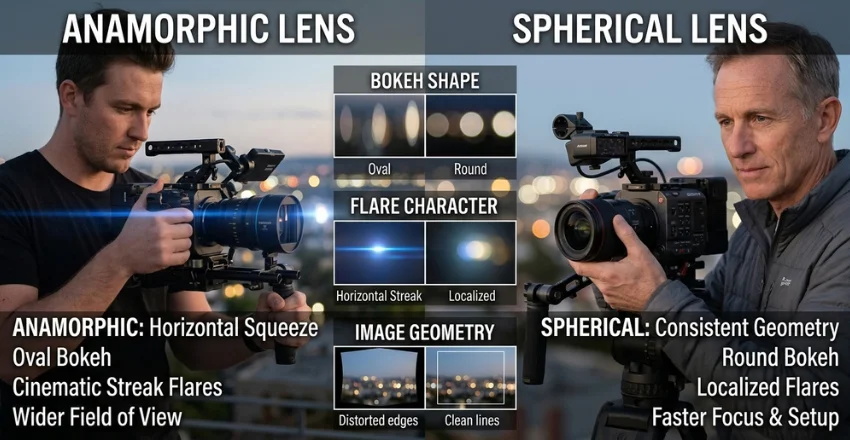
Spherical lenses keep horizontal and vertical geometry consistent during capture. They are usually easier to focus, rig, and match across different cameras. They also suit projects that need clean lines or fast turnaround.
Anamorphic options trade some simplicity for a wider optical field and stronger character. They can preserve more vertical sensor use than a simple widescreen crop. They may also require more careful monitoring, focusing, and finishing.
| Feature | Anamorphic | Spherical |
|---|---|---|
| Horizontal capture | Optically squeezed | Normal geometry |
| Bokeh | Often oval | Usually round |
| Flares | Often horizontal streaks | Usually more localized |
| Framing | Wider for a given focal length | Determined by normal focal length behavior |
| Post workflow | Desqueeze required | No desqueeze required |
| Setup difficulty | Higher | Lower |
| Best use | Stylized widescreen work | General video, documentary, fast production |
How to Shoot and Desqueeze Anamorphic Footage
A clean workflow starts before recording begins. Confirm the lens mount, sensor coverage, squeeze ratio, and intended delivery frame. Then set your camera or monitor to the correct preview ratio.
- Match the lens mount to your camera or use a suitable adapter.
- Confirm the squeeze factor printed by the lens maker.
- Enable the matching desqueeze preview when your camera supports it.
- Frame while watching a corrected image instead of the squeezed recording.
- Apply the same desqueeze value in your editing software.
- Crop only after proportions look correct and framing has been reviewed.
Some current cinema cameras provide built-in viewing support. Sony lists desqueeze monitoring on models such as the FX2, while ARRI supports several ratios on ALEXA LF. These preview tools make composition easier during production.
You can finish footage in editors that support flexible scaling and aspect controls. Techixia’s free video editing software guide covers DaVinci Resolve and several simpler choices. Choose an editor that handles your camera files before committing to a long project.
Choosing the Right Squeeze for Your Camera
Start with the sensor mode your camera can record. A standard 16:9 sensor pairs naturally with 1.33x when you want a near-scope result. Taller modes give stronger squeeze factors more room without extreme side cropping.
Next, consider how much optical character you want. Lower squeeze values often feel subtler and can simplify framing. Stronger values can emphasize oval bokeh, flares, and edge behavior.
Your delivery platform matters too. A theatrical short may benefit from a wide 2.39:1 frame. Vertical social clips can make traditional horizontal anamorphic framing less convenient.
Using Anamorphic Optics on a Smartphone
Phone attachments can provide a lower-cost entry into anamorphic shooting. They mount over a phone camera and squeeze the captured image horizontally. A compatible app can provide a corrected preview while you record.
Before buying an attachment, confirm case compatibility and camera alignment. Techixia’s best budget smartphones guide can help compare current phone hardware for creator use. Strong stabilization and reliable main cameras matter more than high megapixel claims.
Mobile shooters still need to plan the finishing workflow. Some native camera apps record a squeezed image without live correction. Third-party camera apps or editing software can make framing and desqueezing easier.
Common Problems to Expect
Anamorphic shooting adds variables that ordinary lenses avoid. Misaligned adapters can tilt the squeeze axis or create uneven sharpness. Heavy lenses can also strain small mounts or gimbals. Watch for these issues before an important shoot.
- Incorrect desqueeze ratio in the monitor or editor
- Vignetting from incompatible sensor coverage
- Soft corners or edge distortion
- Difficult close focus
- Flare that overwhelms faces or contrast
- Extra weight on handheld rigs and gimbals
- Cropping losses from a mismatched sensor ratio
Testing saves more time than fixing problems later. Record a face, straight lines, bright practical lights, and an infinity focus shot. Review the desqueezed result on a large screen before production day.
When an Anamorphic Setup Makes Sense
Choose anamorphic when the optical behavior supports the story or brand style. It works well for narrative films, music videos, commercials, and planned creator shoots. The wider field can also help when locations need stronger environmental context.
Choose spherical glass when speed, autofocus, compact rigs, or clean geometry matter more. You can still crop spherical footage to a wide frame during editing. That gives the shape without reproducing the same optical artifacts.
A smart first test is a rental or inexpensive attachment. Shoot the same short scene both ways under identical lighting. Compare framing, focus effort, flare control, and editing time before spending more.
Your Next Step
Try an anamorphic lens only after deciding what the optical character should add. Test your planned squeeze ratio with the exact sensor mode you will record. Then build a short editing test before using the setup on paid work.
Frequently Asked Questions
What does an anamorphic lens do?
It compresses horizontal scene information before the image reaches the sensor. The footage looks squeezed until software or monitoring expands it correctly. The result can preserve wider framing while adding distinctive optical traits.
Do anamorphic lenses always need to be desqueezed?
Recorded footage usually needs a matching horizontal stretch before final viewing. Some cameras can show a corrected preview while still recording squeezed files. Always confirm the behavior of your camera and recording format.
Is 1.33x or 2x better?
Neither squeeze is universally better. A 1.33x lens fits 16:9 workflows more easily and creates a milder effect. A 2x option offers stronger character but usually prefers taller sensor formats.
Can I use anamorphic lenses for YouTube videos?
Yes, especially for planned videos where cinematic framing supports the subject. Wide letterboxed footage can work well for reviews, travel films, and narrative content. Techixia’s How to Be a YouTuber guide covers the broader production workflow.
Can smartphones shoot anamorphic video?
Yes, with compatible clip-on or case-mounted optics. Alignment, app support, and camera selection affect the result. Test your complete phone setup before recording an important project.
Are anamorphic lenses useful for still photography?
They can be, but the workflow is less convenient than standard photography. Stills also need correction before natural proportions return. The unusual framing and bokeh can suit deliberate creative work.
