

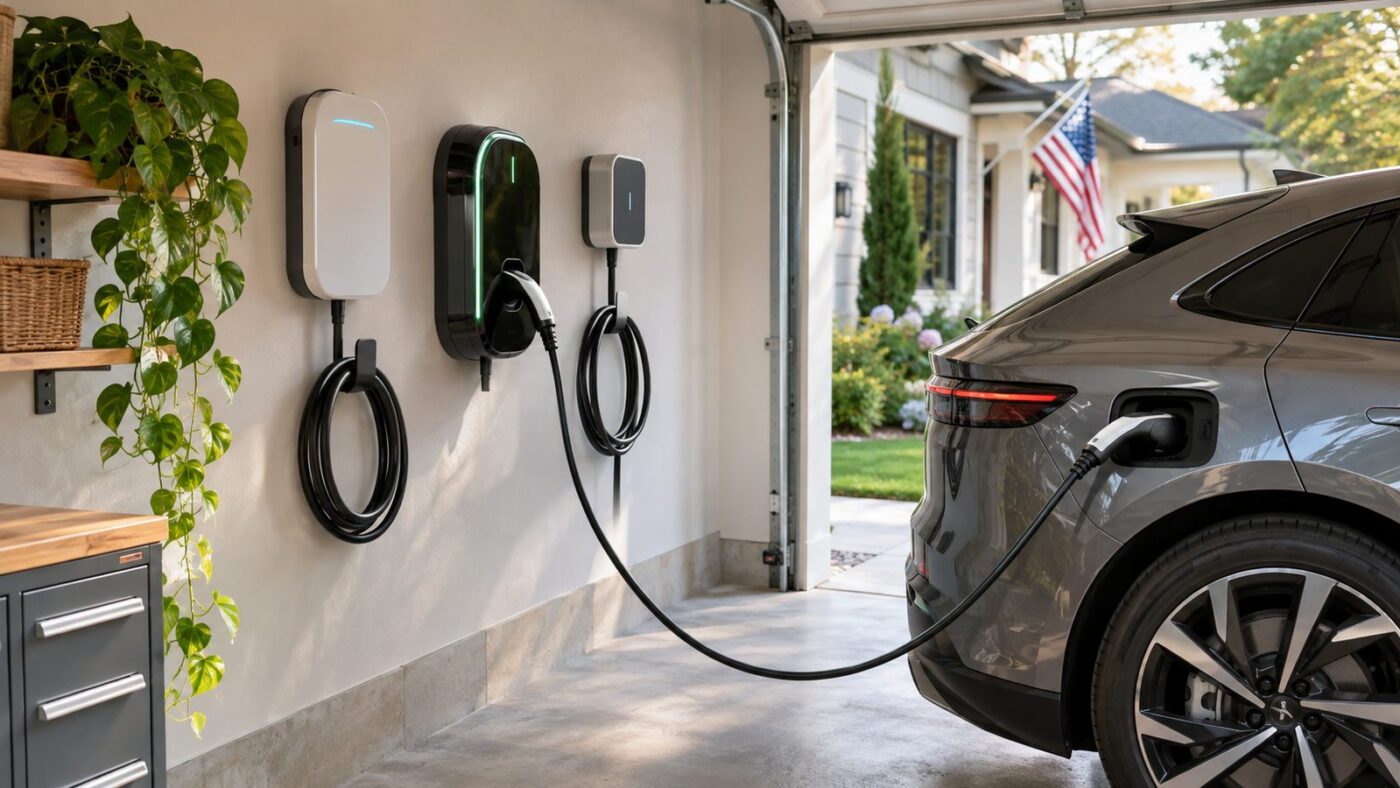
Choosing the best EVSE charger depends on your electrical panel, vehicle connector, parking location, and charging needs. For most U.S. homes, the Emporia Classic offers the strongest balance of speed, smart controls, safety certification, and price. Other chargers make more sense for mixed-EV households, outdoor installations, or homes with limited electrical capacity. A good Level 2 home charger should match your car and your home’s electrical limits. Faster output only helps when the vehicle can accept that power. Safety certification, cable length, weather protection, and installation type matter just as much. Quick answer: Emporia Classic is our top choice for most U.S. households because it combines 48-amp charging, a 25-foot cable, smart scheduling, and UL certification. Tesla’s Universal Wall Connector is better for homes mixing NACS and J1772 vehicles. Grizzl-E Classic offers strong value for buyers who prefer a simpler charger.
Best Home EV Chargers at a Glance
| Charger | Best for | Maximum output | Cable | Connector options | Approx. current price* |
|---|---|---|---|---|---|
| Emporia Classic | Best overall | 48A | 25 ft | J1772 or NACS | From $449 |
| Tesla Universal Wall Connector | Mixed EV households | 48A | 24 ft | NACS + J1772 | $660 |
| ChargePoint Home Flex | App and amperage flexibility | 50A | 23 ft | J1772 or NACS | About $549 |
| Grizzl-E Classic | Budget and outdoor use | 40A | 24 ft | J1772 | $299.99 |
| Emporia Pro | Limited panel capacity | 48A | 25 ft | J1772 or NACS | $599 |
| Autel AC Lite | Feature-heavy alternative | Up to 50A | Varies by version | J1772 or NACS | From $459 |
*Prices were checked against current U.S. manufacturer pages or recent published pricing on November 1, 2026. Promotions and availability can change.
How We Chose the Best EVSE Charger Options
We compared charging speed, connector choices, cable length, installation requirements, certifications, warranties, apps, and current U.S. pricing. We also favored chargers that solve practical home problems instead of chasing the largest amperage number. That includes panel capacity, outdoor exposure, parking position, and future vehicle compatibility. Independent testing and owner research also influenced the rankings. Car and Driver currently favors Emporia for its overall package, while MotorTrend gives Tesla its top overall position. J.D. Power’s 2026 home-charging study ranked Tesla highest for satisfaction, followed by Emporia and ClipperCreek. Techixia readers comparing other electric transportation can also see our electric scooter buying guide. That guide uses the same principle of prioritizing practical performance and electrical safety. Specifications matter most when they improve everyday use.
1. Emporia Classic: Best Overall for Most U.S. Homes
The Emporia Classic is our first choice for buyers wanting speed, smart controls, and reasonable pricing. It delivers up to 48 amps when hardwired and includes a 25-foot cable. Emporia currently lists the model from $449. Its app supports scheduling and energy monitoring, which can help households use cheaper off-peak electricity rates. Buyers can choose J1772 or NACS versions for different vehicles. The charger is also UL listed and ENERGY STAR certified. Pros.
* Up to 48A charging * 25-foot cable * J1772 and NACS choices * Smart scheduling and monitoring * UL listed and ENERGY STAR certified * Competitive price
Cons.
* Maximum output requires hardwiring * Dynamic load management costs more on the Classic * Buyers wanting automatic panel management should consider the Pro
Verdict: Choose the Emporia Classic when you want a balanced home charging station without paying premium-brand pricing. Its combination of output, app features, cable length, and certification suits most households. It also leaves room for either major U.S. connector type.
2. Tesla Universal Wall Connector: Best for Mixed EV Households
Tesla’s Universal Wall Connector is especially useful when a household owns vehicles with different charge ports. It combines a NACS connector with an integrated J1772 solution. Tesla currently lists the universal version at $660. Maximum output reaches 48 amps, or 11.5 kW, on a suitable circuit. Tesla lists a 24-foot cable and indoor or outdoor compatibility. The company’s app also provides scheduling and charging statistics. Pros.
* Supports NACS and J1772 vehicles * Up to 48A output * 24-foot cable * Strong Tesla app integration * Useful for households changing vehicle brands
Cons.
* Costs more than several competing chargers * Hardwired installation is the normal home setup * Extra flexibility may be unnecessary for one-vehicle households
Verdict: This is the strongest choice when connector flexibility matters more than purchase price. It reduces adapter juggling in households with different EV brands. That advantage may become more valuable as U.S. connector adoption continues changing.
3. ChargePoint Home Flex: Best for App and Amperage Flexibility
ChargePoint Home Flex gives homeowners unusually broad control over charging output. Hardwired versions can operate from 16 amps through 50 amps. That flexibility can help an electrician match charging power to available home capacity. The unit has a 23-foot cable and comes in J1772 or NACS configurations. Its app combines home charging controls with access to ChargePoint’s public charging ecosystem. The station is UL listed and ENERGY STAR certified. Pros.
* Up to 50A output * Multiple amperage settings * J1772 and NACS choices * Mature charging app * UL listed * Plug-in and hardwired options
Cons.
* 23-foot cable is shorter than some rivals * High output may require electrical upgrades * One charger can only be activated to one driver account
Verdict: Pick Home Flex when adjustable power and app quality are high priorities. It works particularly well for buyers who may change electrical capacity later. A licensed electrician should set the installation around your circuit and vehicle.
4. Grizzl-E Classic: Best Budget and Outdoor Pick
The Grizzl-E Classic takes a simpler approach than most connected home chargers. It currently costs $299.99 and delivers up to 40 amps. Its heavy aluminum enclosure is designed for demanding indoor or outdoor conditions. The charger supports adjustable 16A, 24A, 32A, and 40A settings. Grizzl-E lists UL certification and a NEMA 4 aluminum enclosure. Buyers can choose NEMA 14-50 or NEMA 6-50 plug versions. Pros.
* Low purchase price * Rugged aluminum enclosure * Adjustable amperage * UL certified * Straightforward operation * Suitable for harsh weather
Cons.
* Classic model lacks the richer smart features of competitors * Maximum charging speed trails 48A and 50A models * Standard Classic focuses on J1772
Verdict: Choose Grizzl-E when durability and price matter more than an advanced app. It is especially attractive for garages, carports, or exposed outdoor installations. Buyers wanting Wi-Fi can step up to the Classic Connect. For more household electrical technology, Techixia’s smart power strip guide explains why safety listings matter. Never connect an EV charger through a household power strip. Home charging requires the proper dedicated electrical setup.
5. Emporia Pro: Best for Homes With Limited Panel Capacity
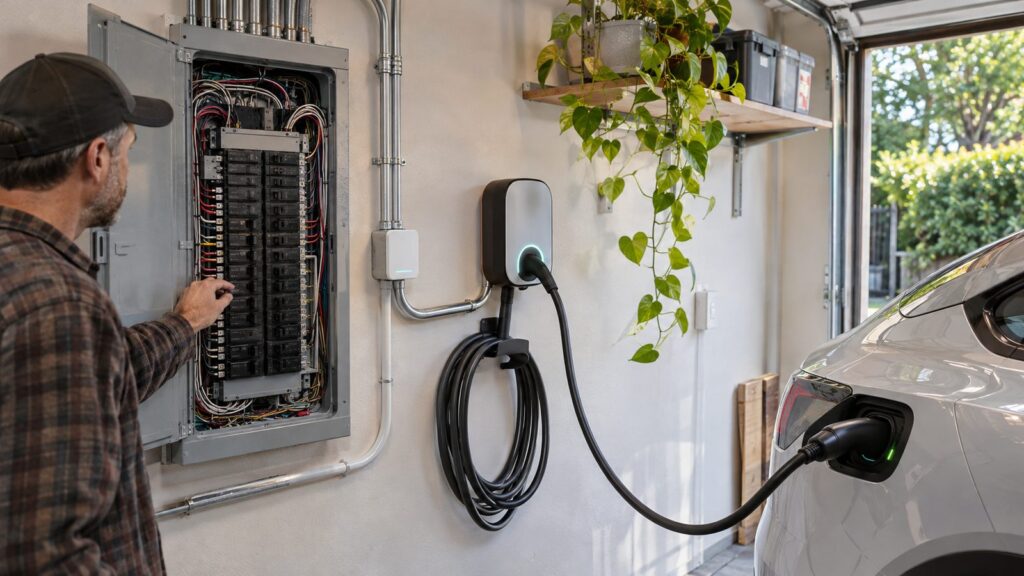
The Emporia Pro is designed around a problem many EV owners discover during installation. A home’s electrical service may lack enough spare capacity for unrestricted Level 2 charging. The Pro uses PowerSmart load management to adjust charging around household demand. It still provides up to 48 amps with the proper installation. Emporia lists a 25-foot cable, three-year warranty, home energy monitoring, and solar integration. Current pricing is $599. Pros.
* Dynamic load management * Up to 48A output * 25-foot cable * Solar charging integration * Home energy monitoring * J1772 and NACS choices
Cons.
* Costs $150 more than the Classic * Installation can be more involved * Some homes do not need its load-management features
Verdict: Buy the Pro when an electrician identifies panel-capacity constraints. Its higher purchase price can make sense if load management avoids larger electrical work. Homes with ample capacity can usually save money with the Classic.
6. Autel AC Lite: Best Feature-Heavy Alternative
Autel’s AC Lite offers another strong option for buyers who want connected home charging. Current U.S. pricing starts around $459 for the 50A version during active promotions. A 40A NEMA 14-50 version is also available. Autel sells both J1772 and NACS configurations across its home charging range. The company also offers models with higher-output hardwired installation and connected management features. Pricing changes frequently because Autel runs direct-store promotions. Pros.
* Competitive promotional pricing * 40A and 50A choices * Connected charging features * NACS options available * Broad home-charger lineup
Cons.
* Sale pricing changes often * Model names and configurations require careful checking * Some buyers may prefer a simpler product lineup
Verdict: Autel deserves consideration when its current promotion undercuts comparable smart chargers. Confirm the exact amperage, connector, and installation type before ordering. The cheapest listed configuration may not match your home or vehicle.
Hardwired or Plug-In: Which Should You Choose?
Hardwiring usually makes the most sense for permanent, higher-output home installations. The EPA notes that chargers rated at 48 amps or higher are commonly hardwired. A permanent connection also removes the receptacle as another potential failure point. Plug-in models remain useful for renters or homeowners wanting easier replacement. Most 40A plug-in chargers use a 50A circuit and suitable 240-volt receptacle. Your electrician should verify the circuit, breaker, wiring, receptacle, and local code requirements. Never assume a faster charger automatically produces faster vehicle charging. Your vehicle’s onboard AC charger sets its own maximum acceptance rate. A 48A station provides no speed advantage when the vehicle accepts only 32A.
NACS or J1772?
Check the charging inlet on your current vehicle before ordering. Many newer U.S. vehicles are moving toward NACS, also standardized as SAE J3400. Existing vehicles commonly use J1772 for AC home charging. A household expecting multiple EV brands should consider connector flexibility carefully. Tesla’s Universal Wall Connector solves this problem inside one unit. Other brands usually require choosing either a J1772 or NACS cable version. This is similar to other vehicle-buying decisions where future use matters more than one specification. Techixia’s Mazda CX-5 vs CX-50 comparison uses that same needs-first approach. Buy for your real ownership pattern, not the longest feature list.
What Safety Features Matter?
Look for a charger certified by a nationally recognized testing laboratory. The EPA specifically recommends laboratory-safety-certified charging equipment and points buyers toward ENERGY STAR certified products. Outdoor installations also need suitable weather protection. Cable length matters because extension cords should not become part of the solution. Measure from the proposed mounting point to the vehicle’s charge port. Leave enough reach for different parking orientations or a future vehicle. Installation deserves the same attention as the charger itself. High-power equipment places a continuous load on your electrical system. Have a qualified electrician assess panel capacity, breaker size, wiring, and local requirements.
Our Final Recommendation
The Emporia Classic is our top pick for most American households. Its $449 starting price, 48A capability, 25-foot cable, smart controls, and certification create strong value. It competes closely with products costing considerably more. Choose Tesla’s Universal Wall Connector when your household needs both major connector types. Choose Grizzl-E Classic for a simple, rugged, lower-cost installation. Pick Emporia Pro when panel capacity makes dynamic load management valuable. Before buying, ask an electrician what your home can support safely. Then choose the charger around that limit and your vehicle’s actual AC charging capability. This approach prevents paying for speed your car or electrical system cannot use.
Frequently Asked Questions
What is the best EVSE charger for most U.S. homes?
The Emporia Classic is our preferred choice for most households in 2026. It combines up to 48A output, smart scheduling, UL certification, and a 25-foot cable. Its $449 starting price also compares well with several premium alternatives.
Is a 40A or 48A home charger better?
A 48A model can charge faster when both your circuit and vehicle support that rate. A 40A unit is already sufficient for many overnight charging routines. Your vehicle’s onboard charger determines whether the extra current produces any benefit.
Do I need a 60A circuit for a 48A charger?
A 48A continuous charging load normally requires a properly sized circuit for that output. Tesla shows 48A output paired with a 60A breaker in its Wall Connector guidance. Your electrician should confirm requirements under applicable local electrical rules.
Is hardwiring safer than using a NEMA 14-50 outlet?
Hardwiring removes the receptacle and plug connection from a permanent charging setup. The EPA notes that higher-output chargers are usually hardwired and describes hardwiring as the safer option. Plug-in charging can still work well when properly installed.
Should I buy NACS or J1772?
Buy the connector matching your vehicle unless you have a clear reason to plan for another standard. Mixed-vehicle households may benefit from Tesla’s Universal Wall Connector. Some competing chargers let buyers select either NACS or J1772 when ordering.
How much does a home Level 2 charger cost?
Current hardware in this comparison runs from about $300 to $660 before installation. Consumer Reports says common home chargers generally fall between $300 and $800. Electrical work can add substantially more when a new circuit or panel work is required. —