

The best wired earbuds give you dependable sound without charging, pairing problems, or Bluetooth delay. For most listeners, the Truthear Pure is the strongest all-round choice. The Sennheiser CX 80U is a better budget option for USB-C devices, while the Apple EarPods remain practical for calls and everyday iPhone use. Best Music Production Software is a useful companion read here.
Current expert roundups also separate recommendations by connector, sound profile, microphone quality, gaming performance, and budget. That approach matters because no single pair suits every listener or device.
Quick Comparison
| Pick | Best for | Connector | Main strength | Main drawback |
| Truthear Pure | Most people | 3.5mm | Warm, detailed sound | Ear hooks may not suit everyone |
| Sennheiser CX 80U | Affordable USB-C audio | USB-C | Strong sound for the price | No volume controls |
| SoundMagic E11C | Budget 3.5mm devices | 3.5mm | Clear, enjoyable tuning | Less refined than premium models |
| Apple EarPods USB-C | Calls and iPhone users | USB-C | Good microphone and simple controls | Weak isolation |
| Oriveti Dynabird | Competitive gaming | 3.5mm | Accurate positional audio | Limited bass impact |
| Shure SE215 | Noise isolation | 3.5mm | Secure fit and strong isolation | Older sound tuning |
| Shure Aonic 3 | Premium balanced sound | 3.5mm | Detail, dynamics, and comfort | High price |
| SoundMagic E80D | Direct USB-C listening | USB-C | Balanced digital audio | Fewer convenience features |
Our verdict: Choose the Truthear Pure when sound quality is your main concern. Pick the Sennheiser CX 80U for an affordable USB-C setup. The Apple EarPods are the safer choice when microphone quality and simple phone controls matter more than isolation.
Before buying, confirm whether your device has USB-C, Lightning, or a 3.5mm socket. A technically impressive pair is useless when it cannot connect without an adapter.
How Did We Choose These Models?
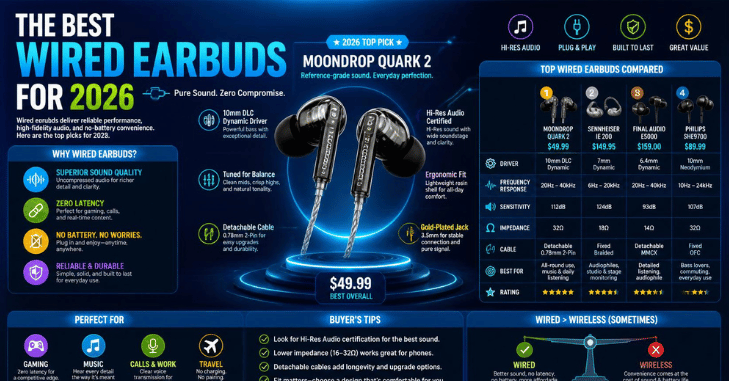
Best Wired Earbuds This list compares models that appear in current expert testing and buying guides rather than ranking products from specifications alone. Recent roundups from SoundGuys, What Hi-Fi, TechRadar, and TechGearLab emphasize several recurring factors:
- Sound balance and detail
- Comfort over longer sessions
- Passive noise isolation
- Cable quality and replaceability
- Microphone performance
- Connector compatibility
- Value within each price range
- Gaming and positional-audio performance
PricesTechGearLab reported testing 12 products from brands including Panasonic, Sony, Linsoul, JBL, and Apple. What Hi-Fi’s July 2026 guide separates its recommendations into overall, cheap, premium, and USB-C categories. Prices and availability can change quickly. Treat the categories below as buying guidance, then compare current retailer prices before ordering.
The Best Wired Earbuds Ranked
1. Truthear Pure: Best Overall
The Truthear Pure is our top pick for listeners who want strong sound without moving into luxury pricing. Its tuning favors warmth and bass, but it still provides enough detail for music, films, and action games.
SoundGuys names it the best overall option in its current roundup. The publication highlights its bass performance, solid passive isolation, included ear tips, and value around its original $89.99 price.
The darker sound profile will not please everyone. Cymbals and other high-frequency details may sound less natural to listeners who prefer a bright or neutral presentation. Its formed ear hooks can also feel awkward on certain ear shapes.
Pros
- Full, satisfying bass
- Good passive isolation
- Suitable for music and games
- Strong value in the midrange category
Cons
- Treble may sound restrained
- Ear-hook fit is not universal.
- Many phones require a USB-C adapter or DAC.
Best for: Listeners who want rich sound and good isolation without paying premium audiophile prices.
2. Sennheiser CX 80U: Best Affordable USB-C Pick
The Sennheiser CX 80U is a practical answer for modern phones and laptops that no longer include a headphone socket. It connects directly through USB-C and uses an integrated digital-to-analog converter.
TechRadar praises its strong audio performance at a low price, while noting the lack of volume controls and some microphone static. The outlet considers it one of the strongest cheap USB-C choices in its 2026 guide.
The CX 80U is especially appealing for students, commuters, and office users who want a simple plug-in option. It avoids the need to charge another device or keep track of a separate adapter.
Pros
- Direct USB-C connection
- Strong audio for its price
- Comfortable, discreet design
- Inline microphone and playback controls
Cons
- No cable-mounted volume buttons
- Microphone performance is not class-leading
- USB-C compatibility can vary across devices
Best for: Buyers seeking an inexpensive USB-C pair for music, videos, and everyday calls.
3. SoundMagic E11C: Best Budget 3.5mm Option
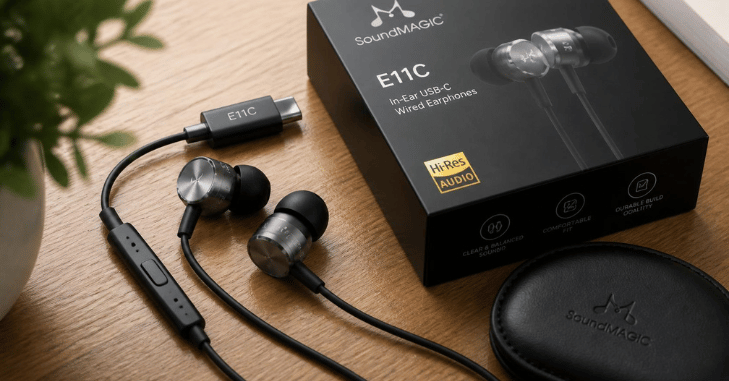
The SoundMagic E11C remains an easy recommendation for devices with a conventional headphone jack. What Hi-Fi describes it as an affordable model with enjoyable sound, an inline remote, and a microphone. Its sound is clear and energetic enough for daily listening without demanding extra amplification.
At only 11 grams, it is also easier to carry than bulkier in-ear monitors. The main limitation is refinement. Premium models offer better timing, separation, and low-level detail. Still, those differences may not justify the extra cost for podcasts, streaming music, and casual use.
Pros
- Lightweight design
- Clear and lively sound
- Inline remote and microphone
- Easy to drive from common devices
Cons
- Fixed cable
- Less detailed than higher-priced choices
- Requires an adapter for many new phones
Best for: Budget buyers with a laptop, controller, music player, or phone that still has a 3.5mm port.
4. Apple EarPods USB-C: Best for Calls and iPhone Users
Apple EarPods do not create the sealed fit of silicone-tip models. That reduces bass and isolation, but it also makes them easy to insert and remove throughout the day.
SoundGuys identifies the USB-C EarPods as its microphone-focused recommendation. The publication praises their simple controls and call performance, while warning that the open fit performs poorly in noisy places and during exercise.
Their shape is comfortable for many users, though people with smaller or larger ears may struggle to keep them secure. The lack of a seal also allows surrounding sound to enter.
Pros
- Good microphone for the price
- Familiar inline remote
- No charging or setup
- Useful for calls, meetings, and voice notes
Cons
- Little passive isolation
- Weak deep-bass response
- Loose fit for some ears
- Compatibility outside Apple devices can vary.
Best for: iPhone, iPad, and Mac users who prioritize calls and convenience over powerful bass.
5. Oriveti Dynabird: Best for Competitive Gaming
Competitive players need more than heavy bass. They need clear directional cues that help separate footsteps, gunfire, dialogue, and environmental sounds.
SoundGuys recommends the Oriveti Dynabird for gaming because it makes sound positioning easy to judge. Its metal housing and tangle-resistant cable also support frequent desk and travel use.
The tuning favors accuracy over cinematic impact. Players who want booming explosions and deep rumble may find it restrained.
Pros
- Clear positional information
- Good separation during busy scenes
- Durable metal construction
- Suitable for music and films too
Cons
- Bass lacks dramatic impact.
- Limited value for casual mobile users
- An external microphone may still be needed.
Best for: Competitive shooter players who value directional accuracy more than powerful low frequencies.
6. Shure SE215: Best for Passive Noise Isolation
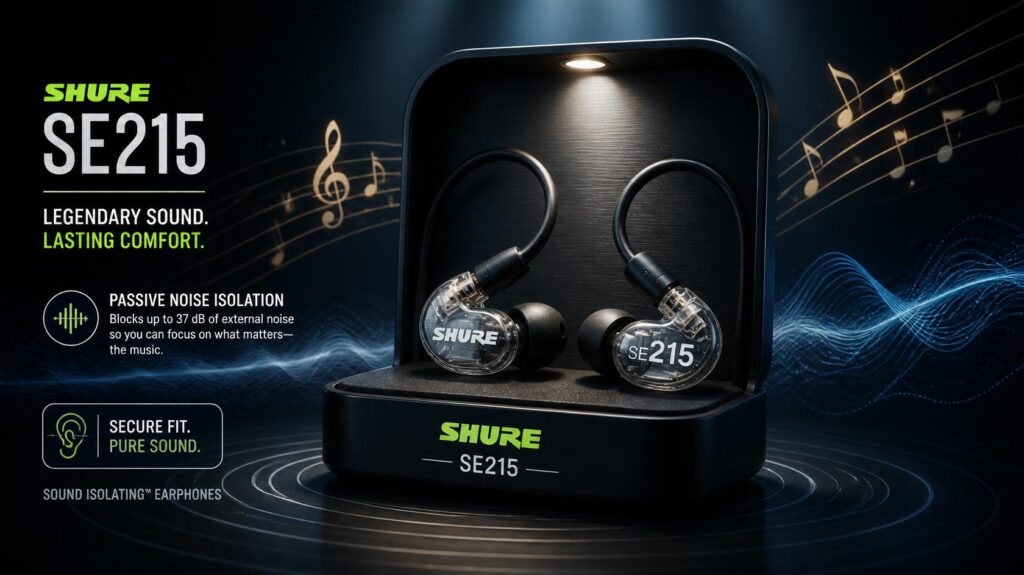
The Shure SE215 uses a secure over-ear cable design and isolating ear tips. It does not provide electronic active noise cancellation, but a proper seal can reduce a large amount of outside sound.
Its detachable MMCX cable is a key advantage. You can replace a damaged cable rather than discarding the entire set. SoundGuys continues to recommend it as a noise-isolating option.
The SE215 has existed for many years, and newer alternatives can offer more detailed tuning. Its durable design and stable fit remain useful for travel, stage monitoring, and commuting.
Pros
- Strong passive isolation
- Secure over-ear fit
- Replaceable cable
- Durable construction
Cons
- Older sound signature
- Fit takes time to master
- No active noise cancellation
Best for: Commuters, musicians, and travelers who want isolation without batteries.
7. Shure Aonic 3: Best Premium Balanced Choice
The Shure Aonic 3 targets listeners who care more about clarity and musical detail than heavy bass. What Hi-Fi ranks it as its best overall model and highlights its dynamics, balance, low weight, and broad ear-tip selection.
Its understated tuning may sound less exciting during a quick store demonstration. Over longer sessions, the controlled presentation can make vocals, acoustic instruments, and complex recordings easier to follow.
The cost is the main obstacle. Most casual listeners will get better value from a cheaper option.
Pros
- Detailed, balanced presentation
- Lightweight and comfortable
- Several included tip options.
- Inline remote and microphone
Cons
- Expensive
- Restrained bass for some tastes
- Poor value for casual podcast listening
Best for: Enthusiasts seeking a refined, compact alternative to premium headphones.
8. SoundMagic E80D: Best Balanced USB-C Alternative
The SoundMagic E80D provides a direct digital connection for phones, tablets, and laptops with USB-C. What Hi-Fi names it its leading USB-C recommendation and describes its sound as balanced and layered.
It is a good middle ground when the Sennheiser CX 80U seems too basic, but a premium audiophile model costs too much. Its neutral approach also suits listeners who do not want exaggerated bass.
Pros
- Direct USB-C connection
- Balanced sound
- Compact and travel-friendly
- No separate dongle required
Cons
- Device support should be checked.
- Less widely available than mass-market models
- Few advanced convenience features
Best for: Listeners seeking balanced USB-C audio rather than a bass-heavy presentation.
What to Check Before You Buy?
Choose the Right Connector
A 3.5mm plug works with older phones, laptops, handheld consoles, audio interfaces, and many game controllers. USB-C suits newer phones and computers, though digital-audio support is not identical across every device.
Lightning earphones still work with older iPhones, but Apple’s current USB-C devices require a different connector or adapter.
Decide Whether You Need a Microphone
An inline microphone is useful for calls, meetings, gaming chat, and voice recording. Apple EarPods are the strongest choice here when clear speech matters more than isolation. Audiophile-focused models may omit the microphone entirely. Check the exact cable version before purchasing.
Prioritize Fit Over Driver Size
A poor seal reduces bass, weakens isolation, and changes the perceived tonal balance. Trying different ear-tip sizes can improve sound more than switching between similarly priced models.
What Hi-Fi also stresses that incorrect tip size often causes disappointing performance, even when the earphones themselves are capable.
Consider a replaceable cable.
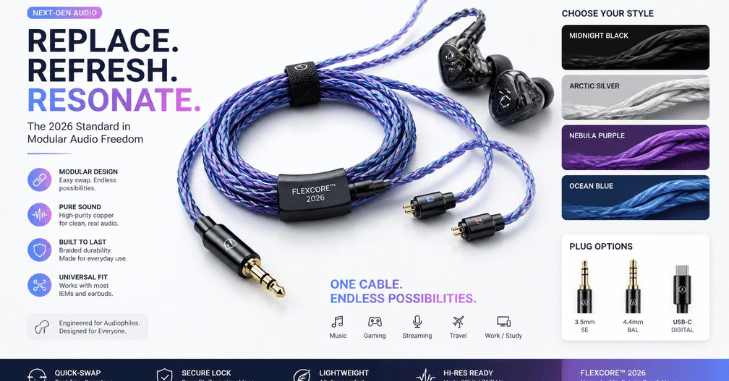
The cable is often the first part to fail. Models with detachable MMCX or two-pin connections may last longer because the cable can be replaced. Fixed cables are simpler and cheaper, but they make repairs harder.
Before placing an order, check current prices and confirm your device’s connector. You can also browse Techixia’s technology coverage for more practical buying advice or read how Techixia researches its guides. Techixia invites readers to submit corrections or topic suggestions when a product changes or becomes unavailable.
Final Recommendation
The Truthear Pure is the strongest all-round recommendation for music-focused buyers. Its warm tuning, isolation, and value make it suitable for many listeners.
Best wired earbuds: Choose the Sennheiser CX 80U when you need an affordable USB-C pair. Select the Apple EarPods for calls, or the Oriveti Dynabird for competitive gaming. The Shure Aonic 3 is the premium pick for listeners who prefer balance and detail.
Apart from that, if you want to know about the article Jeeps and Rubber Ducks, then visit our Technology category.
Frequently Asked Questions
The Truthear Pure is the best all-round option in this comparison. It combines warm sound, useful passive isolation, and a midrange price. Buyers who need USB-C should consider the Sennheiser CX 80U instead.
They can provide lower latency, consistent performance, and freedom from battery charging. Wireless models are more convenient for movement and often include active noise cancellation.
No. Most modern Android phones, iPhones, tablets, and laptops support USB-C audio, but controls, microphones, and digital converters may behave differently. Check the manufacturer’s compatibility list.
Most rely on passive isolation rather than electronic cancellation. A secure seal from models such as the Shure SE215 can reduce outside noise without a battery.
They may be worthwhile when you use high-quality audio sources and care about detail, imaging, and tonal balance. For podcasts, calls, and casual streaming, a budget or midrange pair is usually enough.