
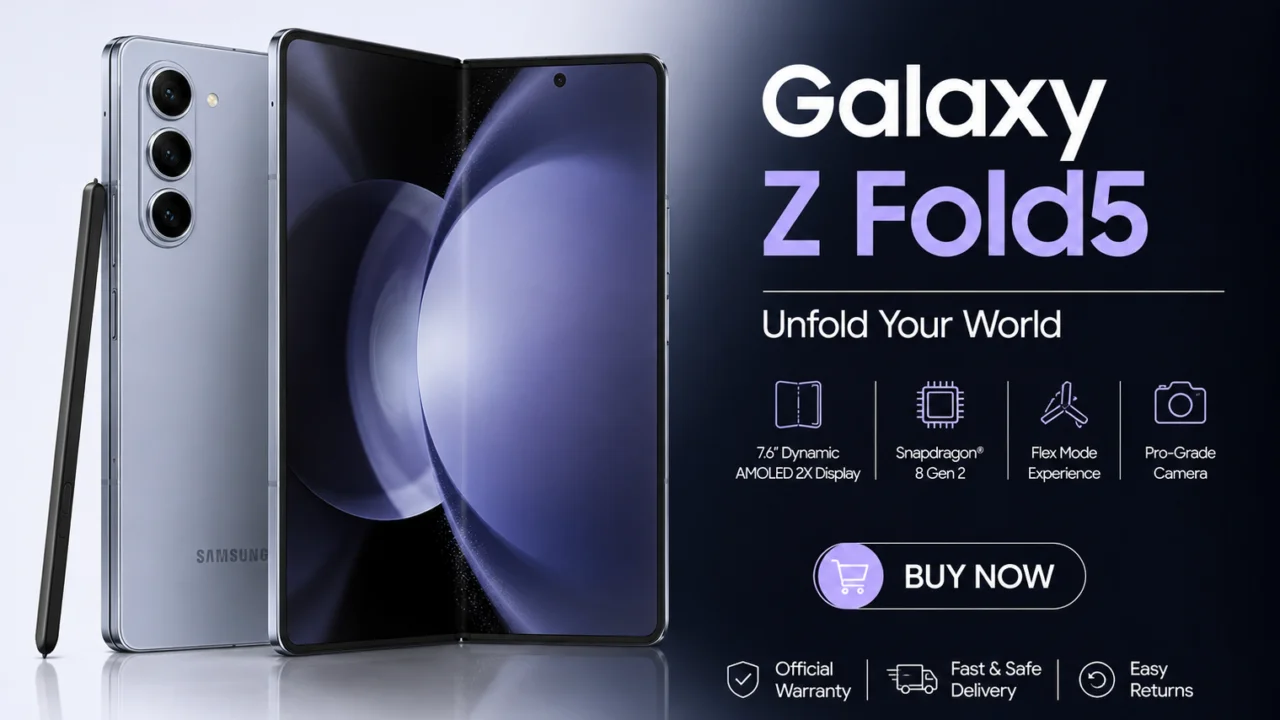
Three years after launch, this is the folding phone that finally makes financial sense. It cost well over a thousand pounds new. It now changes hands for a fraction of that, and it still has years of software support left.
A Galaxy Z Fold5 to buy secondhand runs about $457 to $545 depending on storage, with new sealed stock still listed near $950. You get a 7.6-inch 120Hz inner screen, a Snapdragon 8 Gen 2 chip, 12GB of memory and a 4,400mAh battery. Samsung supports it through Android 17, with security patches into 2028. For a closer look at this, see Redmi Note 11S 5G to Buy.
Specifications and prices
| Detail | Specification |
| Released | 11 August 2023 |
| Chipset | Snapdragon 8 Gen 2, octa-core to 3.36GHz |
| Inner display | 7.6in, 1812 x 2176, 120Hz |
| Cover display | 6.2in, 904 x 2316, 120Hz |
| Memory | 12GB, with 256GB, 512GB or 1TB storage |
| Battery | 4,400mAh, 25W wired, 15W wireless |
| Rear cameras | 50MP main, 12MP ultra-wide, 10MP telephoto |
| Front cameras | 10MP cover, 4MP under-display |
| Weight | 253g, 6.1mm folded |
| Final Android version | Android 17 |
| Storage | Average sale price | Average listing price |
| 256GB | $457 | $538 |
| 512GB | $489 | $526 |
| 1TB | $545 | $566 |
Key takeaways: the used market starts near $360 and averages about $536. Unlocked units run cheaper than carrier stock, sometimes by $90 on the same storage tier. Trade-in offers of $164 to $303 are worth ignoring in favour of a private sale.
Is there a Galaxy Z Fold5 to buy at a fair price?

Yes, and the spread is the interesting part. The same 512GB model averages $653 on one carrier and $460 unlocked. Buying unlocked is almost always cheaper, and it removes network locks that complicate resale later.
New sealed stock at around $950 is difficult to justify. That is close to current-generation foldable money for a phone two generations back, and the extra outlay buys no additional support time.
How long the software lasts
Samsung promised four major Android upgrades, which takes this handset to Android 17, expected late 2026 or during 2027. Quarterly security patches continue for roughly a year beyond that, putting the end of support somewhere around 2028.
For context, the Fold3 loses support in August 2026. Each generation buys you about another year, and that timeline is the main reason to pay more for a newer model rather than an older one.
What it is like to use
- The inner screen is the point: 7.6 inches at 120Hz turns a phone into a genuine reading and document device
- Multitasking handles three apps at once without the stutter earlier folding phones showed
- The battery is the honest weakness, since 4,400mAh across two panels means most heavy users charge before evening
- Charging at 25W is slow by 2026 standards, taking well over an hour
- The cameras are good rather than flagship, with the 10MP telephoto the most useful of the three
- Weight of 253g is noticeable in a shirt pocket but lighter than the previous generation
How it compares to the Fold4
The previous generation shares the same screen sizes, the same 4,400mAh battery and the same camera trio. Differences between them are narrower than the year in between suggests.
| Point of difference | Fold4 | Fold5 |
| Chipset | Snapdragon 8+ Gen 1 | Snapdragon 8 Gen 2 |
| Weight | 263g | 253g |
| Hinge | Small gap when closed | Closes flat |
| Security support until | Around 2027 | Around 2028 |
| Typical used price | Lower | $360 to $545 |
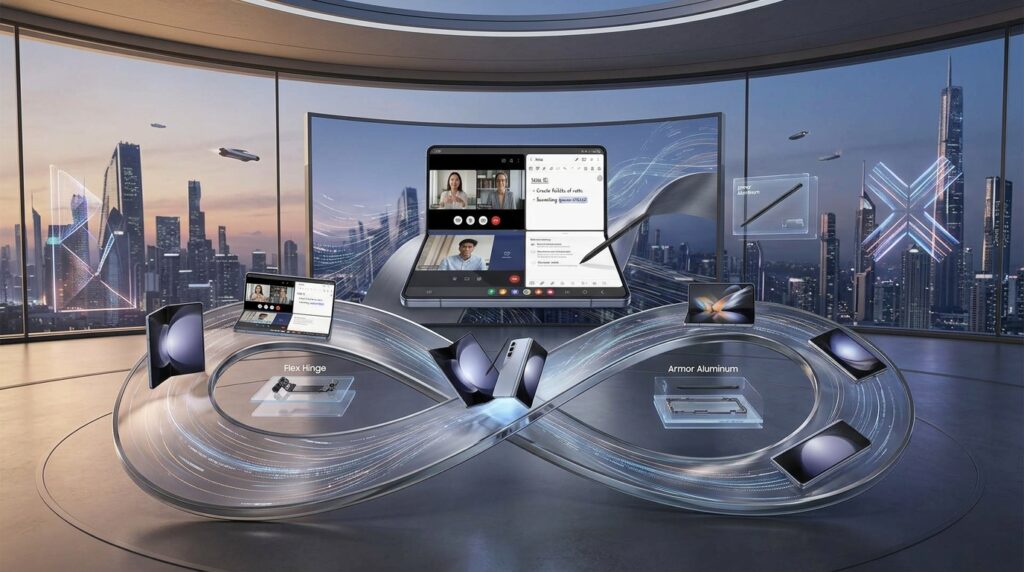
The flat-closing hinge is the practical upgrade. It keeps dust away from the inner panel, which is the component most likely to fail on a folding phone. That alone is worth the price gap for most buyers.
New, used or refurbished?
| Route | Typical price | Best for | Risk |
| New sealed | Around $950 | Buyers who need full warranty | Poor value against current models |
| Refurbished from a dealer | $500 to $650 | Most people | Grading standards vary by seller |
| Private used | $360 to $500 | Confident buyers who can inspect | Hinge and screen wear, no cover |
| Carrier stock | $512 to $653 | Buyers wanting a contract bundle | Network lock, higher price |
Our verdict: buy refurbished and unlocked at 256GB, around the $460 to $500 mark. That combination gives you two years or more of patches, a warranty from the dealer, and no network restrictions. Skip new stock entirely at current prices.
Looking for more expert buying guides, product comparisons, and the latest shopping deals? Explore our ECommerce category for in-depth recommendations before making your next purchase.
What to check before you pay

- Unfold and inspect the crease under bright light, looking for discolouration rather than the crease itself
- Run a finger along the hinge to feel for grit, and listen for grinding as it closes
- Check the phone closes completely flat with no gap at the spine
- Look for lifting along the inner screen’s edges, which signals a failing protective layer
- Confirm battery health and ask when the battery was last replaced
- Verify the IMEI is clean, and the device is not carrier locked
- Test both screens for dead pixels and touch response near the fold
The inner display’s protective layer is the part that ages worst. It is user-visible, not covered by most refurbisher warranties, and not a job to do at home.
Your next step
Set an alert for unlocked 256GB units under $500 and be patient, because prices drift downward each quarter. When one appears, run the seven checks above before paying.
For related reading, see our guides to earbuds worth pairing with a foldable, home routers that keep up with modern phones, and the free security software we rate for Android.
Frequently asked questions
Established refurbished dealers and marketplace sellers with buyer protection. Compare unlocked and carrier listings side by side, since the same storage tier can differ by nearly $200.
Android 17 is its final major version, arriving late 2026 or in 2027, with quarterly security patches for about a year afterwards.
On price per year of remaining support, yes, provided you buy used. Current models cost roughly double for two extra years of patches.
Most owners stop noticing within a fortnight. It is visible at an angle and under direct light, and it does not affect touch response.
It carries a water rating, but no dust rating, so beaches and building sites remain a genuine hazard for the hinge.