


Shopping for the best budget smartphones no longer means choosing between a weak camera and slow software. In 2026, capable options start at around $200, while spending $400 to $600 gets you stronger cameras, brighter displays, faster processors, and longer software support.
Google’s Pixel 10a is the strongest all-around choice for most buyers. It combines a sharp 120Hz OLED display, strong camera processing, good battery life, and a $499 list price. At the other end of the market, Motorola’s $199 Moto G (2026) makes sense when battery life and basic everyday use matter more than speed or long-term software support.
Prices below were checked in August 2026. Retail discounts and regional availability can change quickly.
| Rank | Phone | Price Checked | Best For | Main Compromise |
| 1 | Google Pixel 10a | $499 MSRP | Most people, cameras | Small upgrade over Pixel 9a |
| 2 | Moto G (2026) | $199 | Spending under $200, battery | Slower performance, shorter support |
| 3 | Nothing Phone (4a) Pro | $499 MSRP | Design, display, optical zoom | Carrier and update limitations |
| 4 | Samsung Galaxy A56 5G | $500 MSRP; better below $400 | Samsung buyers on sale | No wireless charging |
| 5 | Apple iPhone 17e | $599 | Lowest-cost new iPhone | 60Hz screen, one rear camera |
| 6 | OnePlus Nord 5 | £399 | Gaming and a fast display | Limited US availability |
| 7 | Poco F8 Pro | £449 | Raw performance and charging | Software ads, slower updates |
Key Takeaways
- Pixel 10a is our top recommendation if your budget is around $500.
- Moto G (2026) is the strongest low-cost option near $200, especially for battery life.
- Nothing Phone (4a) Pro gives you a 144Hz AMOLED display and a dedicated telephoto camera.
- Samsung’s Galaxy A56 makes more sense on sale than at its $500 MSRP.
- iPhone buyers need to stretch their budget to $599 for Apple’s current entry-level model.
- OnePlus and Poco offer stronger performance in markets where their phones are widely available.
How We Chose the Best Budget Smartphones for 2026
This guide compares current manufacturer specifications with independent testing from WIRED, Tom’s Guide, and TechRadar. We prioritized price, battery life, camera quality, performance, display quality, software support, and regional availability. We haven’t claimed hands-on testing that wasn’t performed.
Current rankings consistently place the Pixel 10a near the top of the affordable Android category. They also show why price alone isn’t enough. A cheaper phone can cost more in the long run if its performance declines quickly or its security-support period is too short.
That support issue matters when considering older hardware. Techixia’s Redmi Note 11S 5G buying guide shows how capable hardware can become a poor choice as a primary phone once security updates end.
1. Google Pixel 10a: Best Overall
The Pixel 10a starts at $499 and pairs Google’s Tensor G4 processor with 8GB of RAM. Its 6.3-inch pOLED display runs at refresh rates between 60Hz and 120Hz. Google also specifies a 5,100mAh battery, a 48MP main camera, and a 13MP ultrawide camera.
Its advantage isn’t based on a single headline specification. Camera processing, a bright display, wireless charging, and Google’s long update policy make it easier to keep for several years. WIRED also names it one of its top affordable-phone choices.
Pros
- Strong still-photo quality
- Smooth 120Hz OLED display
- Wireless charging
- Long software-support period
Cons
- $499 isn’t cheap for every buyer
- Hardware changes from the previous generation are modest
Verdict: Pick the Pixel 10a if you want the safest all-around purchase and don’t need flagship-level gaming performance.
2. Moto G (2026): Best Phone Under $200
Motorola’s Moto G (2026) costs $199. It includes a 6.7-inch LCD, 128GB of storage, a Dimensity 6300 processor, and a 5,200mAh battery. Tom’s Guide measured more than 19 hours of battery life during its testing.
You can feel the lower price in its performance and display quality. Software support is also much shorter than Google’s. Still, calls, messaging, streaming, navigation, and social media apps don’t require a $500 handset.
Pros
- Excellent battery endurance for the money
- 128GB of storage
- 5G support
- $199 starting price
Cons
- Performance can feel slow
- LCD instead of OLED
- Limited update policy
Verdict: This is the value pick when $200 is a firm spending limit.
3. Nothing Phone (4a) Pro: Best for Design and Zoom
Nothing’s Phone (4a) Pro has a $499 MSRP. It combines a 6.83-inch 144Hz AMOLED display with a Snapdragon 7 Gen 4 processor. Its camera system includes a 50MP telephoto lens with 3.5x optical zoom.
That’s unusual camera hardware at this price. WIRED found its performance, display, battery life, and triple-camera setup competitive. The drawbacks include a shorter OS-upgrade commitment than Google’s and possible carrier compatibility issues in the US.
Pros
- Distinctive design
- 144Hz AMOLED display
- Dedicated 3.5x telephoto camera
- Fast 50W wired charging
Cons
- No wireless charging
- Carrier compatibility requires checking
- Shorter OS-upgrade policy than Pixel
Verdict: Choose it over the Pixel if display speed, styling, or optical zoom matters more to you than software longevity.
4. Samsung Galaxy A56 5G: Best Samsung Deal on Sale
Samsung’s Galaxy A56 has a 6.7-inch 120Hz AMOLED display, a 5,000mAh battery, and a triple-camera system. Its biggest buying advantage is Samsung’s long software-support commitment.
The main issue is price. WIRED lists a $500 MSRP but recommends waiting until the phone falls below $400. At full price, stronger alternatives become difficult to ignore.
Pros
- Bright AMOLED display
- Long update period
- Solid battery life
- IP67 protection
Cons
- Weaker value at $500
- No wireless charging
- Camera performance isn’t class-leading
Verdict: Buy the A56 when a genuine discount brings the price closer to $400.
5. Apple iPhone 17e: Best Affordable New iPhone
The iPhone 17e starts at $599 with 256GB of storage. Apple pairs its A19 chip with a 6.1-inch OLED display, MagSafe charging, and a 48MP rear camera.
Performance is a major strength, but the display remains limited to 60Hz. You also get only one rear camera. Android competitors around $500 offer greater camera flexibility and faster-refreshing displays.
Pros
- Fast A19 processor
- 256GB of base storage
- MagSafe support
- Strong choice for existing iPhone users
Cons
- Costs $599
- 60Hz display
- Single rear camera
Verdict: It’s the sensible entry point if staying with iOS matters more than maximizing hardware value.
6. OnePlus Nord 5: Best for High-Refresh Gaming
The OnePlus Nord 5 uses Qualcomm’s Snapdragon 8s Gen 3 processor and a 6.83-inch 144Hz AMOLED display. TechRadar lists it from £399 in the UK and describes gaming and multimedia performance as key strengths.
The cameras are less impressive, and availability varies by country. That makes it a stronger recommendation for buyers in markets where OnePlus officially sells the Nord line.
Pros
- Strong gaming performance
- 144Hz AMOLED display
- Fast everyday performance
- Competitive UK pricing
Cons
- Average camera performance
- Not a straightforward purchase in the US
- Regional specifications can differ
Verdict: Gamers should shortlist it when it’s officially supported in their market.
7. Poco F8 Pro: Best Raw Performance for the Money
The Poco F8 Pro pushes performance even further. TechRadar’s August 2026 review lists a Snapdragon 8 Elite processor, 12GB of RAM, a 6,210mAh battery, and 100W charging. UK pricing starts at £449 for the 256GB model.
That specification sheet competes with much more expensive hardware. The main compromise is software. TechRadar highlights system-level advertising and slower updates as drawbacks.
Pros
- Flagship-class Snapdragon 8 Elite processor
- Large battery
- 100W charging
- 120Hz OLED display
Cons
- Software includes advertising
- Updates can arrive slowly
- Availability depends on the market
Verdict: Buy it for speed, gaming, and battery life rather than for the cleanest software experience.
How Much Should You Spend on a Budget Phone?
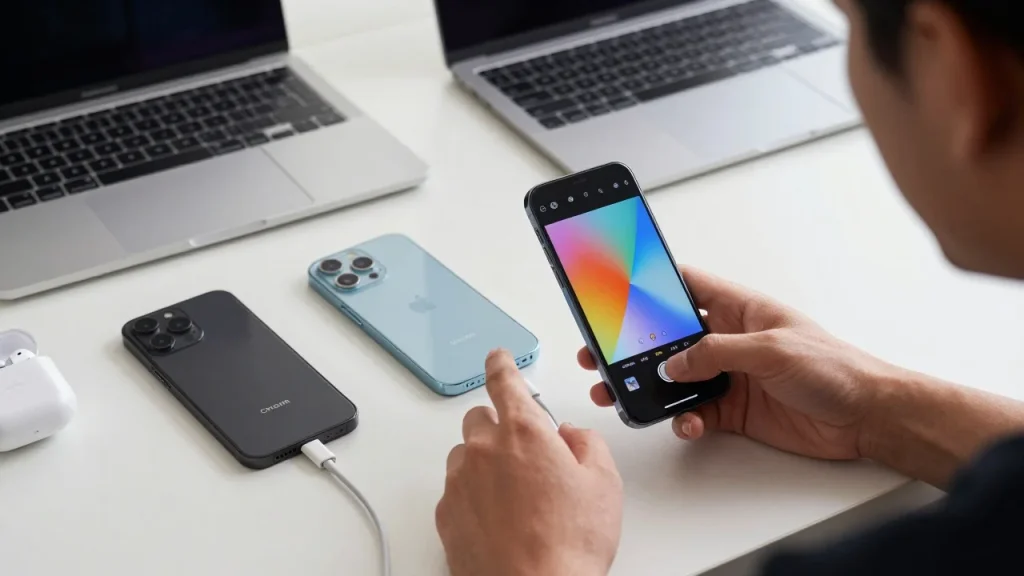
For basic calls, messaging, navigation, and streaming, $200 to $300 can be enough. At this price, expect slower processors, simpler cameras, and shorter software-support periods.
The $350 to $500 range is the sweet spot for many Android buyers. OLED displays, stronger cameras, better build quality, and longer support periods become more common.
At $500 to $600, compare the phone with discounted flagship models too. A sale on a previous-generation premium device can completely change the value equation. WIRED specifically recommends considering older flagship models when current affordable phones don’t meet your needs.
Techixia’s Galaxy Z Fold5 used-buying guide is a useful example. A refurbished former flagship may offer features that no new midrange phone can match, but battery health and remaining software support still matter.
What to Check Before You Buy
Start with the feature you’ll notice every day. That might be battery life, camera quality, display size, or software experience.
Then check four practical details:
- Confirm that the exact model supports your carrier’s network bands.
- Check how many years of security updates remain.
- Compare the sale price with last year’s flagship models.
- Make sure 128GB of storage is enough, or choose expandable storage when available.
Don’t pay extra for a specification you won’t use. A 144Hz display matters more to a gamer than to someone who mainly uses maps, email, messaging, and social media.
Frequently Asked Questions
Final Verdict
The Pixel 10a is the phone we’d recommend first for most buyers. It offers the strongest balance of camera quality, display performance, battery life, software experience, and long-term usefulness at around $500.
Spend less, and the Moto G (2026) becomes compelling. Choose Nothing for design and zoom, Samsung for a strong sale price, Apple for iOS, and OnePlus or Poco when performance is your main priority.
Once your new phone arrives, Techixia’s USB OTG guide can help you connect storage devices and accessories. It’s also worth bookmarking the iPhone and Android recovery mode guide before you ever need it.
FAQs
The Pixel 10a is the strongest all-around recommendation at around $500. The Moto G (2026) is a better fit for buyers spending less than $200. Nothing’s Phone (4a) Pro suits buyers who want a faster display and optical zoom.
For the strongest combination of camera quality and price, the Pixel 10a is our first choice. Google’s image processing and useful ultrawide camera make it easier to recommend than phones that focus mainly on high megapixel counts.
The Moto G (2026) is the standout low-cost battery option on this list. Tom’s Guide recorded more than 19 hours of battery life during its testing.
Sometimes. A supported, refurbished flagship can offer better cameras, premium materials, wireless charging, or faster processors for midrange money. Check battery health, warranty coverage, network locks, and remaining security support before buying.