
If you’re searching for how to be a YouTuber, start by treating your first videos as practice, not a final test. Choose one audience, solve one type of problem, and build a repeatable publishing habit. Growth comes from learning what people click, watch, and return to see.
To become a YouTuber, pick a topic you can sustain and define who you want to help or entertain. Create a channel, publish useful or engaging videos, and study what viewers do next. Start with the gear you own. Improve titles, thumbnails, storytelling, and retention one upload at a time.
| Quick fact | What beginners should know |
| Starter gear | A phone or camera, clear audio, basic lighting, and editing software |
| First goal | Publish 10 videos and improve one skill with each upload |
| Growth signals | Click-through rate, watch time, retention, and returning viewers |
| Content formats | Long videos, Shorts, live streams, or a focused mix |
| Monetization | Eligibility depends on audience milestones, policies, and location |
What You Need Before You Start
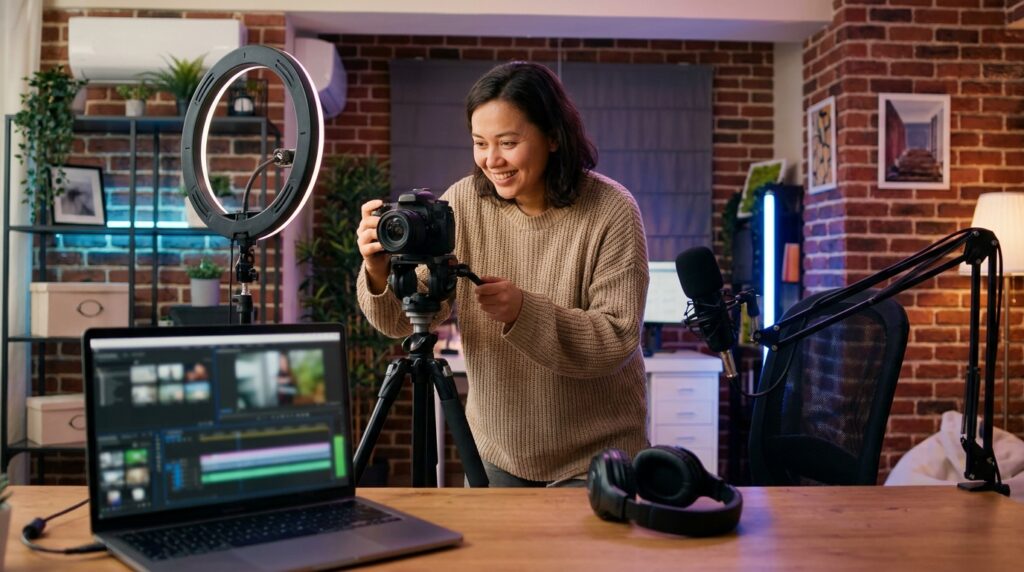
You don’t need a studio, expensive camera, or large team. A modern phone, a quiet recording space, decent lighting, and simple editing software can get a new channel moving.
You also need a Google Account and a YouTube channel. YouTube says a channel is required before you can upload videos, comment publicly, or create playlists. Creating one involves choosing a channel name, handle, and profile image.
More important than equipment is a repeatable idea. You need enough interest in your subject to make videos after the excitement of launching wears off.
A basic starter setup can include:
- A smartphone or camera you already own
- Natural window light or an inexpensive light
- A quiet room or basic microphone
- Video editing software
- A list of future video ideas
- A regular block of time for filming and editing
How to Be a YouTuber in 10 Steps

- Choose a focused topic you can keep creating around.
Start narrower than you think you need to. “Technology” is broad, while “budget Android tips for students” gives viewers a clearer reason to subscribe. Look for the overlap between your knowledge, curiosity, and topics people already watch. If your channel covers tech, Techixia’s latest technology coverage can also help you spot timely subjects worth researching.
- Define the person your videos are for.
Picture one viewer instead of everyone on YouTube. Ask what that person wants to learn, fix, compare, or enjoy. Your channel becomes easier to plan when every video has a clear viewer and outcome. A useful channel promise might be, “I help new Android users get more from their phones without technical jargon.”
- Create and complete your channel.
Pick a name that fits the topic and is easy to remember. Add a profile image, banner, handle, and short description. Keep the branding simple at first. Your videos will matter more than designing a perfect logo before you have published anything.
- Build a bank of at least 20 video ideas.
Search YouTube for questions in your niche and study the suggestions that appear. Read comments on popular videos to find questions viewers still have. Forums, product reviews, and search results can reveal problems people want solved. Practical tutorials such as Techixia’s Google Play Store settings guide show how one specific problem can support several useful subtopics.
- Record with the equipment you already have.
Put your camera near a window, keep it stable, and prioritize clear sound. A simple phone recording with useful information can outperform an expensive production with a weak idea. Upgrade equipment after you understand what is limiting your videos. Don’t buy gear to solve a content problem.
- Edit for clarity instead of effects.
Remove long pauses, repeated points, slow openings, and anything that delays the value promised by your title. Add captions, graphics, or supporting footage when they make the message easier to follow. Fancy transitions rarely rescue a weak story. If you use AI-assisted editing or content tools, review the result rather than publishing unverified output.
- Create the title and thumbnail as a pair.
Viewers often decide whether to watch before they hear a single word. YouTube recommends accurate, concise titles with the most useful words near the beginning. It also reports that 90% of its top-performing videos use custom thumbnails.
Your title should explain the promise. Your thumbnail should make that promise easier to notice, not repeat every word. Avoid misleading curiosity hooks because a click means little if the viewer leaves immediately.
- Publish on a schedule you can maintain.
Consistency means having a workable system, not forcing daily uploads. One thoughtful video each week can be more sustainable than seven rushed uploads followed by a month of silence. Pick a pace that leaves time for research, filming, editing, and improvement.
You can also test Shorts beside longer videos. Use each format for a purpose rather than posting clips at random. Protect your channel by using material you own or have permission to use, including music and video clips.
- Use analytics to decide what to improve.
Open YouTube Studio after you have enough data to notice patterns. YouTube Analytics includes impressions, click-through rate, views, watch time, average view duration, audience information, and retention data.
Keep the diagnosis simple. Low clicks can point to the topic, title, or thumbnail. A sharp early drop can mean the opening took too long. Strong retention on one subject gives you a reason to explore related ideas.
- Improve one major skill with every upload.
Don’t rebuild your entire strategy after one weak video. Make the next title clearer, shorten the next intro, improve the next thumbnail, or tighten the next edit. Learning how to be a YouTuber is mostly a cycle of publishing, measuring, adjusting, and repeating.
Use Your First 10 Videos as a Training Sprint
Your first 10 uploads can have a job beyond getting views. Give each one a specific learning goal. Video one can teach you how to finish and upload. Two Videos can focus on cleaner audio. Video three can test a stronger opening. Later videos can improve storytelling, thumbnails, topic selection, and pacing.
After the tenth upload, compare the group. Which subjects attracted viewers? Which titles earned clicks? Where did viewers leave? That review gives you better direction than trying to design a perfect channel before publishing anything.
Common Beginner Mistakes to Avoid
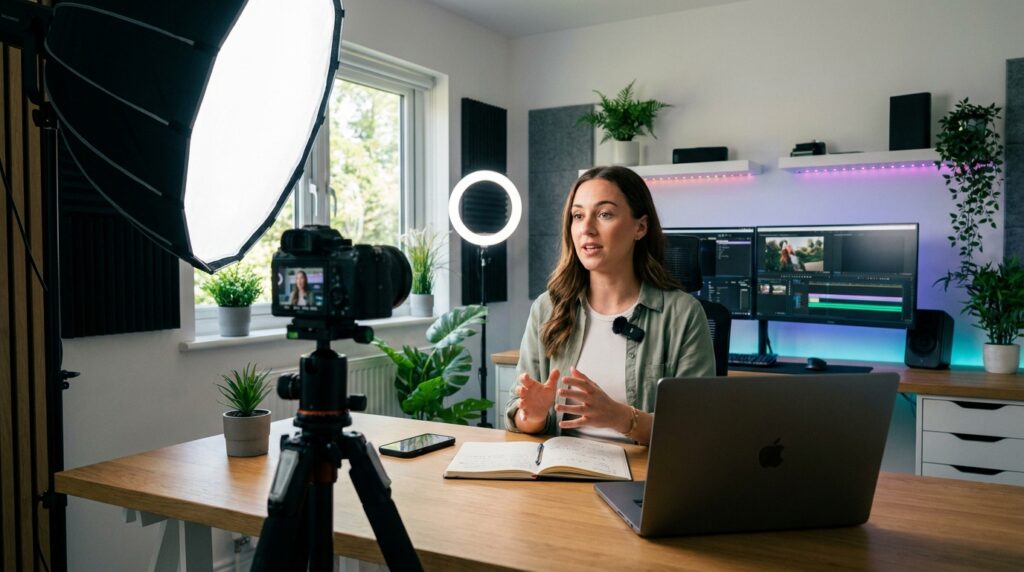
New creators often spend too much time preparing and too little time producing. You need a usable channel, not months of branding work before your first upload.
Watch for these traps:
- Buying expensive gear before proving you enjoy creating
- Switching niches after every low-view video
- Copying another creator without adding your own angle
- Making slow intros before delivering the promised value
- Treating subscriber count as your only measure of progress
- Using copyrighted clips or music without checking usage rights
- Sharing private information that doesn’t need to be public
Online visibility can create risks beyond video performance. Think about what appears in your background, personal documents, location clues, and material involving other people. Techixia’s coverage of the QTCinderella deepfake case and online safety is one example of why creators should take consent and digital safety seriously.
When Can You Make Money on YouTube?
You can earn from a channel in several ways, including ads, memberships, sponsorships, affiliate offers, products, and services. Each path has different requirements, so don’t build your first videos around revenue alone.
In eligible countries, YouTube’s expanded Partner Program has an earlier entry point for certain fan-funding and Shopping features. Creators can qualify with 500 subscribers, three public uploads in 90 days, and either 3,000 public watch hours or 3 million public Shorts views.
Ad and YouTube Premium revenue sharing uses the higher threshold. That requires 1,000 subscribers plus either 4,000 valid public watch hours in 12 months or 10 million valid public Shorts views in 90 days. Channels must also meet YouTube’s policies and pass review. Reaching a threshold is a milestone, not a guarantee of a full-time income.
Your Next Step
Don’t make “start a YouTube channel” a goal with no date attached. Write three video ideas today, choose the simplest one, and plan its title before you record.
Publish it, review what happened, and make the second video better in one measurable way. That process gives you something no amount of planning can provide: real evidence about what your audience wants.
Frequently Asked Questions
Yes. A phone can handle recording, and many editing tools also work on mobile. Focus first on useful content, clear audio, stable framing, and enough light. Buy dedicated equipment when a specific limitation starts slowing you down.
Choose a pace you can maintain while improving the videos. Weekly or every two weeks may work for long-form content, while simpler formats may support a faster schedule. Quality and consistency matter more than choosing an arbitrary upload number.
There is no reliable timeline. Topic choice, viewer demand, video quality, packaging, competition, and your rate of improvement all affect growth. Judge your first months by skills learned and useful audience signals, not by whether the channel already replaces a salary.
Anyone who can create a channel and produce videos can begin. Building an audience requires learnable skills such as research, speaking, scripting, editing, thumbnail design, and reading analytics. You don’t need to master all of them before your first upload.
Not in every case. The expanded Partner Program offers earlier access to some monetization features at 500 subscribers in eligible regions. Ad revenue sharing still uses the higher 1,000-subscriber threshold and its watch-time or Shorts-view requirements.